show 1 to 20 (of 37 software programs)
CAGILA
 The CAM system CAGILA is an innovative NC programming software for 2D beam cutting. Functions developed especially for laser, water jet and plasma cutting save more than 75% time used for data preparation in various areas like the automotive, electronic, and medical industry. A lot of functions optimized for micro and macro cutting reduce efficiently time for NC programming. Optimized and high quality import interfaces for DXF dialects, AutoCAD DWG, IGES, Gerber-RS274, EPS/ PS/ PDF / AI, Trumpf Tops Geo format, HPGL, NC G code format ...
NC programming software for laser , waterjet and plasma cutting
The CAM system CAGILA is an innovative NC programming software for 2D beam cutting. Functions developed especially for laser, water jet and plasma cutting save more than 75% time used for data preparation in various areas like the automotive, electronic, and medical industry. A lot of functions optimized for micro and macro cutting reduce efficiently time for NC programming. Optimized and high quality import interfaces for DXF dialects, AutoCAD DWG, IGES, Gerber-RS274, EPS/ PS/ PDF / AI, Trumpf Tops Geo format, HPGL, NC G code format ...
WinTool Management Software
 WinTool is a user-friendly tool management, which is installed more than 10'000 worldwide. Among other things, it is characterized by modern interfaces. For each CNC operation WinTool manages all related production data in the network. WinTool is the only independent solution provider for tool management and cooperates with all manufacturers of tools, measuring devices, CAM systems, etc.
Data manager tool for programming and workshop
WinTool is a user-friendly tool management, which is installed more than 10'000 worldwide. Among other things, it is characterized by modern interfaces. For each CNC operation WinTool manages all related production data in the network. WinTool is the only independent solution provider for tool management and cooperates with all manufacturers of tools, measuring devices, CAM systems, etc.
ELECTRIX AI: Electrical-CAD software
 WSCAD offers a complete software for planning and maintenance tasks in electrical and automation engineering. It includes functions for the planning of electrotechnical systems and apparatus, for design and production planning, assembly, plant and inventory planning. The software includes many interfaces to PLM and ERP systems. For maintenance and service staff, there is the WSCAD Augmented Reality App. It recognizes the targeted component, displays it in the plan and shows the technical data.
The world’s first and leading provider of AI powered Electrical-CAD software
WSCAD offers a complete software for planning and maintenance tasks in electrical and automation engineering. It includes functions for the planning of electrotechnical systems and apparatus, for design and production planning, assembly, plant and inventory planning. The software includes many interfaces to PLM and ERP systems. For maintenance and service staff, there is the WSCAD Augmented Reality App. It recognizes the targeted component, displays it in the plan and shows the technical data.
COBUS NCAD
 COBUS NCAD offers many powerful options for CNC programming. These include, for example, the DXF Deluxe option with the ability to read in DXF geometry elements. When reading in, an automatic conversion to CNC machining takes place. The assignment of DXF elements to CNC machining operations is freely configurable. The functionalities include 3D simulation with time calculation, feed adjustments in corners and for small radii, material-dependent feeds, feed limits, extensive drilling macros, support for up to the 5th axis as a positioning axis, and much more.
CNC programming from batch size 1
COBUS NCAD offers many powerful options for CNC programming. These include, for example, the DXF Deluxe option with the ability to read in DXF geometry elements. When reading in, an automatic conversion to CNC machining takes place. The assignment of DXF elements to CNC machining operations is freely configurable. The functionalities include 3D simulation with time calculation, feed adjustments in corners and for small radii, material-dependent feeds, feed limits, extensive drilling macros, support for up to the 5th axis as a positioning axis, and much more.
AiVPack - Packaging development
 AiVpack is an innovative plug-in for Adobe® Illustrator® CS6/CC which enables the user to create packaging, displays and folding boxes in a quick, simple and well-arranged way and opens new possibilities to the user. You can choose from more than 140 – optional up to 700 - industry-approved parameterized ECMA and FEFCO standards for solid fiber and corrugated board which can then be customized to your needs. Simplify your selection by a 3D-wireframe-view....
AiVpack is an plug-in for Adobe® Illustrator® to create packaging, dispays and folding...
AiVpack is an innovative plug-in for Adobe® Illustrator® CS6/CC which enables the user to create packaging, displays and folding boxes in a quick, simple and well-arranged way and opens new possibilities to the user. You can choose from more than 140 – optional up to 700 - industry-approved parameterized ECMA and FEFCO standards for solid fiber and corrugated board which can then be customized to your needs. Simplify your selection by a 3D-wireframe-view....
!MC5
 !MC5 offers as EDI converter and as software for enterprise communication numerous functions and options for the flexible connection of the ERP software to the outside world. Features to support the transfer of CAD/CAM data (ENGDAT, ENGPART), the exchange of data according to standards (OFTP, OFTP2, etc.) and the processing and conversion of EDI data (UN/EDIFACT, VDA, ASC X12, etc.).
Communication software and EDI interface and EDI converter
!MC5 offers as EDI converter and as software for enterprise communication numerous functions and options for the flexible connection of the ERP software to the outside world. Features to support the transfer of CAD/CAM data (ENGDAT, ENGPART), the exchange of data according to standards (OFTP, OFTP2, etc.) and the processing and conversion of EDI data (UN/EDIFACT, VDA, ASC X12, etc.).
VPack®
 VPACK ® includes the functions of VERPAK and also offers the user completely new possibilities for packaging development through the unique practice-oriented integration of modern 2D and 3D design, graphics and animations. For the first time, the software combines the realistic 3D representation of the finished packaging with the flat production form of the packaging in 2D. With VPACK ® cuts can be formed with imported 3D foreign bodies. Thus, the integrated generation of AVI and VRML files allows the simple and fast ...
The 3D cad/cam software VPack® - the best choice for your packaging project
VPACK ® includes the functions of VERPAK and also offers the user completely new possibilities for packaging development through the unique practice-oriented integration of modern 2D and 3D design, graphics and animations. For the first time, the software combines the realistic 3D representation of the finished packaging with the flat production form of the packaging in 2D. With VPACK ® cuts can be formed with imported 3D foreign bodies. Thus, the integrated generation of AVI and VRML files allows the simple and fast ...
Hexagon - CADWorx Bundle (CADWorx Plant, P&ID and Design Review)
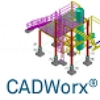 This bundle includes CADWorx Plant, P&ID and Design Review and is the perfect solution for the requirements of the chemical and petrochemical industry. The intuitive interface enables fast and efficient processing of projects of any size. The bundle offers a complete range of tools for creating intelligent 3D plant design with DWG-based results.
Complete solution for plant design
This bundle includes CADWorx Plant, P&ID and Design Review and is the perfect solution for the requirements of the chemical and petrochemical industry. The intuitive interface enables fast and efficient processing of projects of any size. The bundle offers a complete range of tools for creating intelligent 3D plant design with DWG-based results.
HiCAD - the powerful 3D CAD system
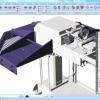 The industry-independent all-in-one CAD solution HiCAD offers a modular structure within one application and thus sets standards in professional engineering. You design - freely or parametrically - with field-proven 2D and 3D functions, model directly in the assembly (Assembly based Modeling) and use special knowledge of the most diverse industries for your individual tasks. In addition to basic CAD modules and industry suites, a wide range of extension modules are available.
2D/3D CAD system, integrated industry functions, free and parametric mod.
The industry-independent all-in-one CAD solution HiCAD offers a modular structure within one application and thus sets standards in professional engineering. You design - freely or parametrically - with field-proven 2D and 3D functions, model directly in the assembly (Assembly based Modeling) and use special knowledge of the most diverse industries for your individual tasks. In addition to basic CAD modules and industry suites, a wide range of extension modules are available.
ncCAD32
NC programming system for laser, flame and water jet cutting as well as CNC punching
The NC programming software ncCAD32 includes modules for: 2D CAD function, macro programming, DXF and DWG import, technology module for punching with automatic tool placement and automatic gate flag generation, automatic, semi-automatic and interactive nesting routines. With the contour nesting module, you can nest cutting paths, DXF and DWG drawings and other external formats in seconds. All technology data, such as gate flags, are transferred.
ESPRIT
CAM software for CNC machines
Esprit is a modular CAM system for NC programming of milling, turning, mill-turn and EDM machines. The software can be linked to any available CAD system. The program includes its own ESPRIT API for extensions as well as Microsoft VBA as a standard macro language and integrated 3D volume simulation for production control. Optional direct interfaces are available to Catia V4/V5, Pro/E, Unigraphics, STL and STEP.
BricsCAD®
 BricsCAD® offers all the familiar .dwg 2D CAD features, plus productivity tools and 3D direct modeling tools. With BricsCAD you get more for less. BricsCAD offers a whole new world for those who venture beyond the AutoCAD® horizon. Among its ever-growing community of users, BricsCAD is known for its feature-rich combination of 2D drafting and 3D modeling. As a full-featured 2D&3D CAD software, BricsCAD offers one of the most advanced and intuitive drafting and modeling solutions.
Modern 2D drawing and 3D modeling software, BIM and mechanical engineering CAD software
BricsCAD® offers all the familiar .dwg 2D CAD features, plus productivity tools and 3D direct modeling tools. With BricsCAD you get more for less. BricsCAD offers a whole new world for those who venture beyond the AutoCAD® horizon. Among its ever-growing community of users, BricsCAD is known for its feature-rich combination of 2D drafting and 3D modeling. As a full-featured 2D&3D CAD software, BricsCAD offers one of the most advanced and intuitive drafting and modeling solutions.
ELITECAD 3D BIM Software
model-oriented and parametric 3D CAD software (BIM)
Free trial version! With the model-oriented 3D CAD software ELITECAD Architecture you playfully develop your BIM ( 3D CAD model ). For this purpose, the complete architecture functionality, such as parametrics for walls, ceilings, windows, roofs, stairs, professional rendering, graphical mass determination, extensive interfaces and libraries are available. The definition of free-form surfaces and the modeling of free 3D bodies are also part of the functionality of the full version. The BIM (Building Information Modeling) can be displayed photorealistically by means of integrated rendering functionality and is represented in floor plans ...
MEANS V13 WORKS
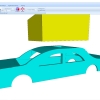 MEANS is a CAD-neutral FEM solution for finite element calculations up to 599,000 elements and 599,000 nodes for statics, dynamics and buckling for mechanical engineering, tank construction, façade construction and steel construction. MEANS only requires the neutral DXF, STL or STEP files. There are numerous additional modules. The geometry of the component or assembly to be analyzed is required for an FEM service. An assembly STEP file from the CAD system is sufficient for this.
FEM Simulations up to 499,000 nodes and elements
MEANS is a CAD-neutral FEM solution for finite element calculations up to 599,000 elements and 599,000 nodes for statics, dynamics and buckling for mechanical engineering, tank construction, façade construction and steel construction. MEANS only requires the neutral DXF, STL or STEP files. There are numerous additional modules. The geometry of the component or assembly to be analyzed is required for an FEM service. An assembly STEP file from the CAD system is sufficient for this.
TT-PLANT - 3D CAD Solution for Piping Design in Plant Engineering
 TT-PLANT is a user-friendly and powerful 3D CAD software for piping design in plant engineering. It can be used as a standalone application or in conjunction with the TT-3D Viewer, Autodesk Inventor, or AutoCAD. Thanks to its XML architecture, TT-PLANT integrates very well into existing CAD/PDM/P&ID environments. Among other features, it offers 3D isometric dimension chains in three CAD modes. Navigate even the most complex models with SKM-3D technology.
Flexible Piping Design for Engineering and Service Companies
TT-PLANT is a user-friendly and powerful 3D CAD software for piping design in plant engineering. It can be used as a standalone application or in conjunction with the TT-3D Viewer, Autodesk Inventor, or AutoCAD. Thanks to its XML architecture, TT-PLANT integrates very well into existing CAD/PDM/P&ID environments. Among other features, it offers 3D isometric dimension chains in three CAD modes. Navigate even the most complex models with SKM-3D technology.
Sheet CAD
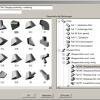 Was ist Sheet CAD? With Sheet CAD, more than 240 different types of sheet metal coils can be processed, such as tanks, transition pieces, ventilation ducts, silos, pipe elbows, pipe branches, screw conveyors, etc. The desired case is selected from the selection menu (Fig. 1) and the dimensions are entered directly (Fig. 2). Then you get the scaled three-dimensional figure on the screen - for the first visual check. The full-scale development is called up by mouse click. Abb. 1: Selection menu ...
over 240 unwindings, 3 D representation, puzzle, nesting, folds, dimensioning, DXF
Was ist Sheet CAD? With Sheet CAD, more than 240 different types of sheet metal coils can be processed, such as tanks, transition pieces, ventilation ducts, silos, pipe elbows, pipe branches, screw conveyors, etc. The desired case is selected from the selection menu (Fig. 1) and the dimensions are entered directly (Fig. 2). Then you get the scaled three-dimensional figure on the screen - for the first visual check. The full-scale development is called up by mouse click. Abb. 1: Selection menu ...
NC-OPT-S / NC-OPT-L
CAD/CAM system for programming CNC machines in sheet metal processing
NC-OPT-S is a software for automatic or interactive program generation for all machining centers in the 2D and 2 1/2D range for sheet metal working. The solution is especially designed for punching/nibbling, laser and beam cutting. It includes features for automatic cleanup of CAD geometry, automatic NC creation and automatic process optimization for all common NC machines. The solution is vendor-neutral and equipped with a standardized PPS interface.
Tekla Structures for steel, metal construction, plant engineering
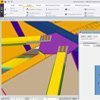 Tekla Structures is a particularly powerful 3D CAD software for steel, metal and plant construction, Tekla Structures is widely used internationally and enables users worldwide to effectively create and manage geometrically highly accurate structures, regardless of the material, size or complexity of the structure. Tekla Structures models are suitable for handling the entire construction process, from design to fabrication, erection and construction management. This speeds up the process and eliminates errors ...
Professional CAD software for 3D steel structures (single/multi-user)
Tekla Structures is a particularly powerful 3D CAD software for steel, metal and plant construction, Tekla Structures is widely used internationally and enables users worldwide to effectively create and manage geometrically highly accurate structures, regardless of the material, size or complexity of the structure. Tekla Structures models are suitable for handling the entire construction process, from design to fabrication, erection and construction management. This speeds up the process and eliminates errors ...
Tekla Structures for in-situ concrete, precast concrete, formwork & reinforcemen
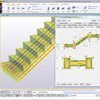 Tekla Structures is a powerful 3D CAD and Building Information Modeling software for steel, reinforced concrete and precast concrete construction. The software enables users worldwide to effectively create and manage geometrically highly accurate structures, regardless of the material, size or complexity of the structure. BIM Software Tekla Structures Tekla Structures is a software for Building Information Modeling (BIM). Tekla models are suitable for handling the entire construction process, from design to fabrication, erection and construction management ...
Professional CAD software for 3D reinforced concrete structures (single/multi-user)
Tekla Structures is a powerful 3D CAD and Building Information Modeling software for steel, reinforced concrete and precast concrete construction. The software enables users worldwide to effectively create and manage geometrically highly accurate structures, regardless of the material, size or complexity of the structure. BIM Software Tekla Structures Tekla Structures is a software for Building Information Modeling (BIM). Tekla models are suitable for handling the entire construction process, from design to fabrication, erection and construction management ...
Flownex® SE
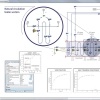 Flownex supports the determination of pressure losses, volume flows and heat transfer for the connected elements of complex fluid and thermal engineering systems and plants, both stationary and transient. The software determines results for gaseous and liquid media, single-phase and multi-phase flows, gas or fluid mixtures as well as sludgy and non-Newtonian media. It includes an interface (API) for data exchange with Excel, Mathcad, MATLAB/Simulink and LabVIEW.
1D-CFD: Flownex determines pressure losses, mass flows and heat transfers
Flownex supports the determination of pressure losses, volume flows and heat transfer for the connected elements of complex fluid and thermal engineering systems and plants, both stationary and transient. The software determines results for gaseous and liquid media, single-phase and multi-phase flows, gas or fluid mixtures as well as sludgy and non-Newtonian media. It includes an interface (API) for data exchange with Excel, Mathcad, MATLAB/Simulink and LabVIEW.