Software > Healthcare, social work and Medicine > Social Institutions

Software for Social Institutions / Facilities

Current market overview of software for social institutions and publicly funded health and care organizations, social pedagogues, International Red Cross and Red Crescent Movement, Caritas, etc. The software usually includes solutions for catering management for social institutions and supports e.g. driving services such as ambulance services, scheduled driving services, meal services but also e.g. home emergency call systems. Software for social institutions often also includes client management, appointment management and options for billing and evaluation of services.

Are you looking for a suitable software for social institutions?
show 1 to 3 (of 3 software programs)
Ö+ the project software for public service providers

Ö+ is a project software for public service providers
Ö+ is a project software for public service providers Ö+ is a powerful solution for modern project management that has been specially developed to make teams and organizations more efficient, digital and transparent. Routine tasks such as the creation of status reports, planning and progress monitoring of tasks and the preparation of meetings are supported by the software. Lessons learned functions and knowledge building are established in the organization through the integrated documentation function.
NEXUS / FOODCARE

Ordering meals directly from the patient's room
Ordering meals directly from the patients room With the NEXUS / FOODCARE solution, food can be ordered directly from the room. Individual preferences or dislikes can be taken into account as well as the time and place of serving. NEXUS / FOODCARE presents all ingredients of food and meals transparently and complies with EU Regulation No. 1169/2011. NEXUS / FOODCARE only automatically offers patients / users the menus suitable for them.
GisboAlarm
Silent alarm for social institutions
Silent alarm for social institutions Assaults in workplaces with public traffic are unfortunately on the increase and are rarely clearly foreseeable. The risk of threat is inherent in contact with people with a potential for aggression, alcohol or drug addiction. A multi-level alarm system such as GisboAlarm can strengthen your employees' sense of security and provide support and assistance from colleagues or security officers in the event of a threat by triggering a silent alarm.
show 1 to 3 (of 3 software programs)
1
  •  

Looking for the right software? Trust SoftGuide!

Our experts will find the perfect solution for you - independently and at the cutting edge of software trends.

Search similar categories like Social Institutions:

Show all 383 Software categories

Articles related to the topic Social Institutions:

The Importance of Software Solutions for Social Service Organizations

This article explores the various aspects and benefits of software solutions for social service organizations and shows how these technologies can help simplify day-to-day work while improving the quality of care.

SoftGuide

Use of Cloud Solutions in Social Service Organizations

The use of cloud solutions opens up new opportunities for social service organizations. This article highlights numerous benefits that go far beyond simple IT cost savings.

SoftGuide

Software Tips

Social Service Organizations

"Social service organizations" is an umbrella term for a wide range of institutions and welfare organizations that provide social services and support. These include, for example, youth welfare organizations, healthcare and care facilities, organizations for people with disabilities, senior care facilities, social counseling centers, refugee support services, homeless support services, and volunteer agencies, among many others. These organizations and welfare associations play an important role in promoting social inclusion, healthcare, and education. They offer a broad range of services designed to support people in different life situations and improve their quality of life.

Key Elements of Software for Social Service Organizations

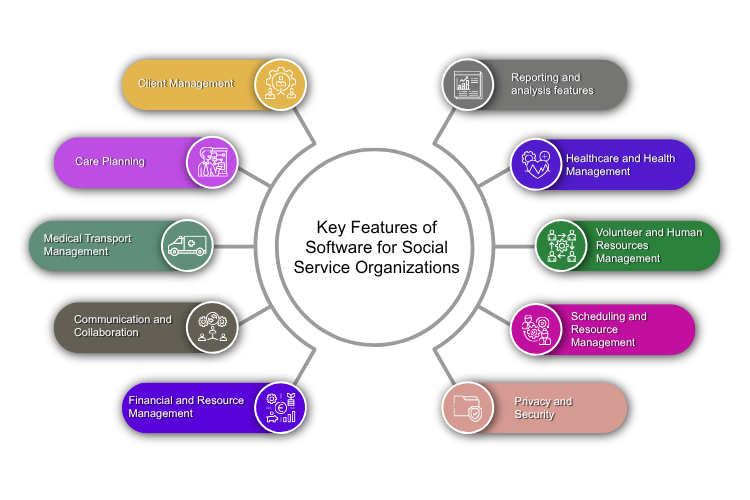
Software for social service organizations can include a wide range of modules and features designed to support and optimize the administration, care, and assistance provided to clients. Depending on the intended use, the scope of the solution can vary considerably.

Key Elements of Software for Social Service Organizations

Client Management

Sustainability
  • Data Management: Recording and managing client data, including personal information, contact details, and case histories.
  • Case Management: Tracking and managing case files, including notes, documents, and progress reports.
  • Appointment Scheduling: Managing and scheduling appointments and meetings with clients.

Care Planning

Sustainability
  • Individual Care Plans: Creation and management of individualized care and support plans for clients.
  • Documentation: Recording care measures and activities, including daily notes and reports.
  • Goal Setting and Progress Tracking: Defining goals and monitoring client progress.

Medical Transportation Management

Sustainability
  • Online Booking System: Enables patients and family members to book transportation services quickly and easily via a website or app.
  • Scheduling and Administration: Manages transport requests and appointments to avoid conflicts and plan optimal routes.
  • Automated Route Planning: Optimizes travel routes based on real-time traffic data and the current location of vehicles.
  • Notifications and Reminders: Sends automatic notifications to patients, drivers, and medical staff about scheduled journeys and any changes.

Communication and Collaboration

Sustainability
  • Email and Messaging Functions: Integration of communication tools for internal and external communication.
  • Document Management: Storing, organizing, and sharing documents and files.
  • Collaboration Platforms: Team collaboration tools such as shared calendars and task lists.

Financial and Resource Management

Sustainability
  • Budget Management: Planning and managing budgets and financial resources.
  • Invoicing and Billing: Creating and managing invoices and payments.
  • Donation Management: Managing donations, including donor data and donation history.

Reporting and Analytics Functions

Sustainability
  • Report Creation: Generating standard and custom reports for internal and external purposes.
  • Data Analysis: Analyzing data to evaluate the effectiveness of programs and services.
  • Compliance Reporting: Reports to demonstrate compliance with legal and regulatory requirements.

Care and Health Management

Sustainability
  • Medication Management: Managing medication and medical instructions.
  • Care Documentation: Recording care activities and care progress.
  • Health Monitoring: Tracking clients' health indicators and related data.

Volunteer and Staff Management

Sustainability
  • Volunteer Management: Recording and managing volunteer data, deployment schedules, and working hours.
  • Staff Management: Managing employee data, duty rosters, and working hours.
  • Training and Professional Development: Managing training and continuing education programs for staff and volunteers.

Scheduling and Resource Allocation

Sustainability
  • Duty Roster Creation: Creating and managing schedules for employees and volunteers.
  • Resource Management: Managing and allocating resources such as rooms and equipment.

Data Protection and Security

Sustainability
  • Access Rights and User Management: Managing user permissions and access controls.
  • Data Security: Ensuring data security through encryption and other protective measures.
  • Compliance Management: Ensuring compliance with data protection laws and policies.

Typical Functions of Software for Social Service Organizations

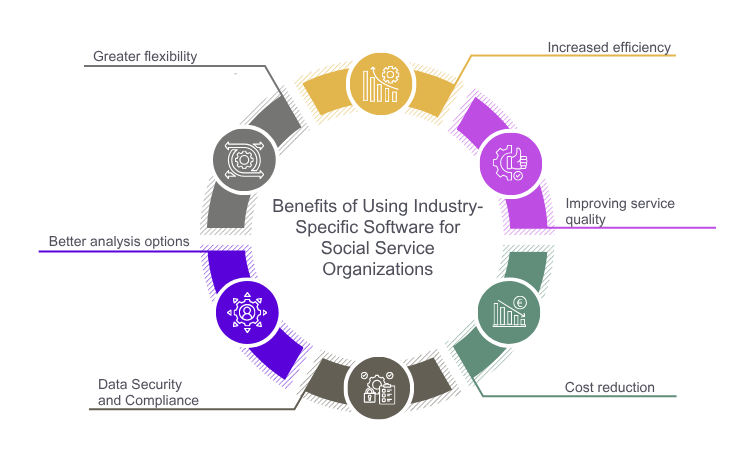
Benefits of Using Industry-Specific Software for Social Service Organizations

The use of specialized software solutions in social service organizations offers numerous benefits that improve both operational efficiency and service quality.

Benefits of Using Industry-Specific Software for Social Service Organizations

Sustainability

Greater Efficiency

Software solutions automate many administrative tasks that would otherwise have to be handled manually. This saves time and resources that can instead be used for direct client support. Examples include automated route planning for transport services or the digital management of meal plans.

Sustainability

Improved Service Quality

By using software, social service organizations can plan and coordinate their services more effectively. This leads to higher service quality, whether through more precise appointment scheduling, better communication, or faster emergency response times.

Sustainability

Cost Reduction

More efficient processes and fewer errors help reduce operating costs. Software solutions support the optimal use of resources and help avoid unnecessary expenses. For example, optimizing routes for transport services can reduce fuel and time costs.

Sustainability

Data Security and Compliance

Industry-specific tools for social service organizations are designed to meet high security standards and comply with legal requirements. This is particularly important for protecting sensitive client data and ensuring compliance with data protection regulations such as the GDPR.

Sustainability

Enhanced Reporting and Analysis

Software solutions provide extensive options for data evaluation and analysis. This enables social service organizations to make well-informed decisions and continuously improve their services. For example, analyzing performance data can help identify bottlenecks and optimize processes.

Sustainability

Increased Flexibility

Modern software solutions are often cloud-based and offer mobile access. This allows employees of social service organizations to work more flexibly and access important information from anywhere. In crisis situations or unforeseen events, this flexibility can be a major advantage.

Tips for Selecting Software for Social Service Organizations