Overview of Cloud Technologies
Cloud computing has evolved rapidly in recent years and has become a key technology across many industries. At its core, it involves delivering IT resources over the internet, enabling companies and organizations to access powerful servers, storage capacity, and applications without having to invest in expensive hardware. This technology offers numerous advantages, including scalability, flexibility, cost efficiency, and the ability to access data and applications from anywhere in the world.
Cloud technologies are now used in a wide range of areas, from data processing and storage to software development, artificial intelligence, and machine learning. Organizations use cloud services to optimize business processes, shorten innovation cycles, and remain competitive. The public sector is also increasingly adopting cloud solutions, especially social service organizations.
Importance for Social Service Organizations
For social service organizations, which often operate with limited financial means and, in many cases, limited staffing resources, cloud solutions offer significant benefits. By using cloud computing, these organizations can modernize their IT infrastructure without making major upfront investments. The flexibility and scalability of the cloud allow social organizations to adjust their resources based on actual needs, helping them work more efficiently and effectively.
Cloud solutions also improve collaboration and communication. Cloud-based platforms enable social service organizations to exchange information seamlessly and work together in real time, regardless of geographic location. This is particularly important at a time when digital transformation and remote work are becoming increasingly significant.
Implementing cloud technologies also helps social service organizations store and manage their data securely. Cloud providers invest heavily in security measures and can often offer stronger protection against data loss and cyberattacks than many traditional on-premises IT solutions.
Overall, the use of cloud solutions opens up new opportunities for social service organizations to improve their services while increasing operational efficiency.
Benefits and Risks of Cloud Software
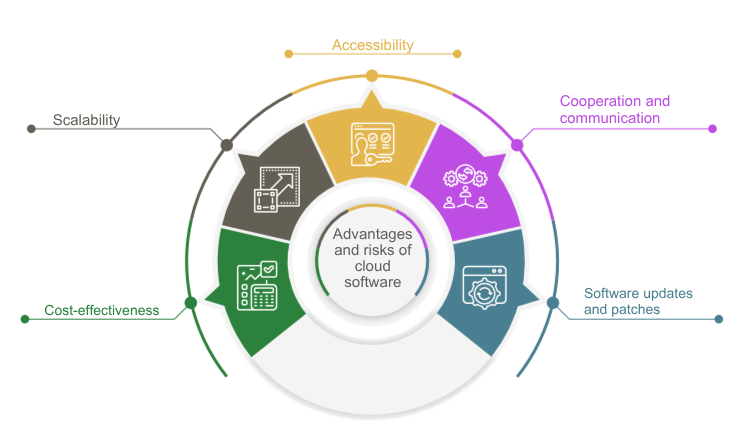
Benefits
Cost Efficiency
One of the greatest advantages of cloud software for social service organizations is cost efficiency. Since there is no need for expensive hardware investments, organizations can significantly reduce their IT costs. Flexible subscription models make it possible to pay only for the services actually used, which is especially beneficial when demand fluctuates. This helps organizations manage budgets more effectively and use resources more efficiently.
Scalability
Cloud software offers a high degree of scalability, allowing social service organizations to adapt their IT resources quickly and easily to actual demand. Whether an organization is growing or temporarily needs additional capacity, cloud solutions make it possible to scale resources up or down at any time. This ensures that the right amount of IT resources is always available without overprovisioning or underprovisioning.
Accessibility
Accessing data and applications from anywhere is another major advantage of cloud software. This is particularly beneficial for mobile social services and employees who are frequently on the move or work from different locations. The cloud enables them to access the information they need anytime and anywhere, increasing both efficiency and responsiveness.
Collaboration and Communication
Cloud-based tools improve collaboration and communication among staff. They enable the easy exchange of information and documents as well as real-time coordination of activities. This leads to smoother and more efficient workflows, as everyone involved stays up to date and can work together on projects.
Software Updates and Patches
Regular software and system updates are necessary to close security gaps and protect systems against new threats. Cloud software is kept up to date by the provider, including the timely installation of security updates and patches.
Risks
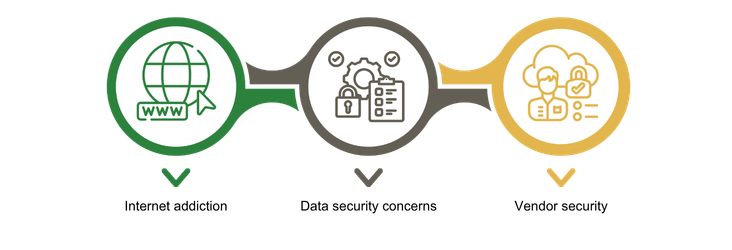
Dependence on the Internet
Using cloud software requires a stable and reliable internet connection. In areas with poor connectivity or during temporary network outages, this can lead to significant problems. Social service organizations must ensure that their internet connection is robust enough to guarantee continuous access to cloud services.
Data Security Concerns
One of the most frequently cited risks associated with cloud software is concern about data security and privacy. Since sensitive data is stored in the cloud, there is a risk of cyberattacks and data breaches. Social service organizations must therefore ensure that the cloud services they choose have strong security measures in place and comply with data protection requirements.
Provider Reliability
The security and reliability of the cloud provider are another critical issue. Social service organizations must be able to rely on the provider to manage their data securely and ensure continuous availability. This also includes regular security updates and contingency plans in the event of outages. In addition, switching providers can be complex and time-consuming, which increases dependence on a single provider.
Data Protection and Data Security
Data Protection Laws
In Europe, the General Data Protection Regulation (GDPR) governs the handling of personal data. The GDPR sets strict requirements for the processing and protection of this data. Key aspects include the consent of the data subjects, the right to access and erasure, data minimization, and the obligation to report data breaches within 72 hours.
In addition to the GDPR, various countries have supplementary data protection laws that must also be observed. In Germany, for example, the Federal Data Protection Act (BDSG) complements the requirements of the GDPR. These laws are intended to protect people’s privacy and ensure that their data is processed responsibly and securely.
Specific Requirements for Social Service Organizations
Social service organizations are subject to particular requirements when implementing data protection laws. Because these organizations often work with especially sensitive data such as health information, social data, or data relating to vulnerable individuals, a very high level of protection is required. Social service organizations must ensure that only authorized persons have access to this data and that it is protected against unauthorized access, loss, or misuse.
Transparency is another key element. Social service organizations must inform individuals about which data is being collected, why it is needed, and how it is processed. This also includes the obligation to grant access to personal data upon request and to delete it if requested, provided that no statutory retention requirements apply.
Security Measures
Encryption
Encrypting data is a fundamental element of data security. It protects both stored and transmitted data from unauthorized access. By implementing encryption technologies, social service organizations can ensure that sensitive information remains protected even if it falls into the wrong hands.
There are two main types of data encryption: encryption of stored data (data at rest) and encryption of transmitted data (data in transit). Data at rest should be encrypted on hard drives, in databases, and on other storage media. Data in transit should be encrypted using secure protocols such as HTTPS or TLS to protect it from interception and tampering during transmission.
Cloud data is encrypted both during transmission (in transit) and while stored (at rest). This protects data against unauthorized access and ensures that even in the event of a data breach, the information remains unreadable.
Access Controls
Cloud providers implement strict access control mechanisms to ensure that only authorized individuals can access the data. This includes the use of two-factor authentication (2FA), role-based access control (RBAC), and regular reviews of access rights.
Firewalls and Intrusion Detection Systems (IDS)
Firewalls protect cloud infrastructure from unauthorized access and malicious traffic. Intrusion Detection Systems monitor network activity and identify unusual patterns that may indicate a security incident.
Security Certifications and Standards
Many cloud providers are certified according to international security standards such as ISO/IEC 27001, SOC 2, and GDPR compliance frameworks. These standards define strict requirements for data protection and data security.
DDoS Protection
Protection against Distributed Denial of Service (DDoS) attacks is an essential part of cloud software security. DDoS attacks aim to disable a service by overwhelming it with a flood of requests, which can overload resources and ultimately cause service outages. Automated systems analyze traffic and identify potentially harmful activity in order to initiate immediate countermeasures. By limiting the number of requests per unit of time from a specific source (rate limiting) and controlling data flow (throttling), the impact of DDoS attacks can be minimized. These measures help maintain legitimate traffic while blocking malicious requests.
User Responsibility
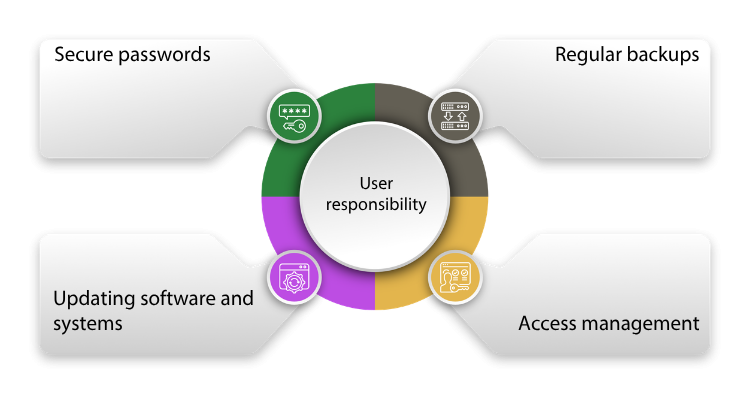
In addition to the security measures implemented by cloud providers, social service organizations must also actively contribute to data security themselves.
Key measures include:
Strong Passwords
Using strong, unique passwords is essential. Passwords should consist of a combination of letters, numbers, and special characters and should be changed regularly.
Regular Backups
Social service organizations should perform regular backups of their data and ensure that these backups are stored securely. This helps protect against data loss caused by technical failures, cyberattacks, or other unforeseen events.
Updating Software and Systems
It is important to keep all software applications and operating systems up to date at all times in order to close security gaps and ensure protection against new threats.
Access Management
Effective access management is essential for restricting access to sensitive data. This can be achieved by implementing roles and permissions that ensure only authorized persons can access specific information. A proven best practice is the principle of least privilege, under which employees receive only the minimum rights required to perform their tasks. In addition, social service organizations should regularly review which employees have access to which data and ensure that outdated or unnecessary access rights are revoked.
Employee Awareness
Training and raising employee awareness about data protection and data security are crucial to protecting data in social service organizations.
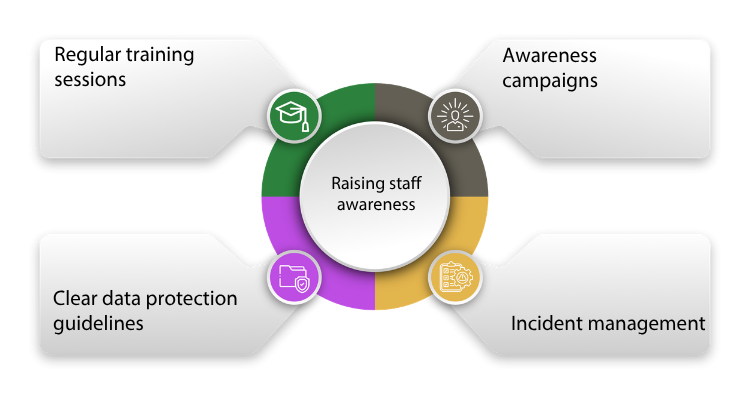
Here are some measures that should be taken:
Regular Training
Regular employee training is a key building block for ensuring data protection and overall data security within an organization. This includes topics such as recognizing phishing attacks, securely handling sensitive information, and understanding the importance of strong passwords.
Awareness Campaigns
Ongoing awareness campaigns can help keep employees informed about current threats. This can be done through newsletters, workshops, or interactive online training.
Clear Data Protection Policies
Clear and easy-to-understand data protection policies should be in place to explain to employees how data must be handled. These policies should be reviewed and updated regularly.
Incident Management
Incident Management
Employees should know how to respond in the event of a security incident. This includes reporting suspicious activities, initiating immediate measures, and communicating with the IT security team. By combining the robust security measures of cloud providers with the active role of social service organizations and comprehensive employee training, a high level of data protection and data security can be achieved.
Conclusion
The use of cloud solutions in social service organizations offers numerous advantages that go far beyond simple IT cost savings. By using cloud computing, social organizations can modernize their IT infrastructure and flexibly adapt it to their needs without having to make major investments. Increased scalability, accessibility, and improved collaboration and communication through cloud-based tools all make a substantial contribution to enhancing the efficiency and effectiveness of social services.
Despite the many benefits, there are also challenges and risks that must be considered. A reliable internet connection is essential, and concerns regarding data security and privacy must be taken seriously. It is crucial that both cloud providers and social service organizations themselves implement comprehensive security measures and update them regularly. This includes encrypting data, enforcing strict access controls, and training employees in the secure handling of sensitive information.
The future of cloud technologies in social service organizations promises further progress and innovation, enabling these organizations to fulfill their mission even more effectively. By strategically combining technological progress with organizational measures, social service organizations can gain the greatest possible benefit from cloud solutions while maintaining a high standard of data protection and data security.