The customer journey describes the entire process a customer goes through, from the first interaction with a company to the post-purchase phase. This process includes all touchpoints and experiences a customer has with a brand. In the digital age, where consumers interact across various channels and platforms, understanding and optimizing the customer journey is of crucial importance for companies.
Companies must design the entire customer journey seamlessly and positively in order to remain competitive. Each phase provides an opportunity to improve the customer experience, foster loyalty, and build long-term relationships. Feedback management plays a central role in optimizing the customer journey. By collecting, analyzing, and acting on customer feedback, companies can better understand the needs and expectations of their customers and respond to them in a targeted way.
Phases of the Customer Journey
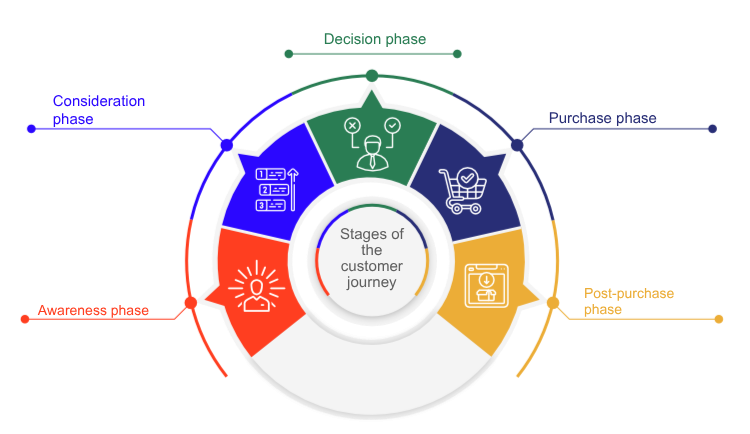
The customer journey consists of different phases that a customer goes through before making a purchase decision and beyond. These phases are crucial for understanding and optimizing the overall customer experience.
Awareness Phase
In the awareness phase, the customer becomes aware of a problem or need and begins looking for solutions. This phase is of great importance because the first impression of a company or product is formed right here.
Consideration Phase
In the consideration phase, the customer compares different options and evaluates which solution best fits their needs. At this stage, it is important for companies to provide clear and comprehensive information (descriptions, demos, webinars, customer reviews, testimonials, etc.) about their products or services.
Decision Phase
In the decision phase, the customer makes the final purchase decision. Companies should make the decision-making process as simple and smooth as possible. Easy ordering options, purchase incentives such as vouchers, or the provision of truly excellent customer service are extremely helpful here.
Purchase Phase
In the purchase phase, the actual buying process takes place. Here, companies must ensure that the customer has a positive experience, for example through secure payment methods, transparent communication, and high usability.
Post-Purchase Phase
The post-purchase phase is crucial for long-term customer retention. In this phase, the goal is to satisfy the customer and motivate them to make further purchases through, for example, after-sales services, loyalty programs, and feedback management.
Key Touchpoints in the Customer Journey
Key touchpoints are the moments when a customer interacts with the brand and which have a strong influence on their perception and decisions. Identifying these touchpoints is crucial in order to take targeted measures to optimize the customer journey.
-
Website visits: The customer’s first interaction with the company’s website.
-
Social media: Interactions on social platforms, including likes, shares, and comments.
-
Customer service contacts: Inquiries and support calls where customers seek direct assistance.
-
Purchase transactions: The actual buying process and the checkout experience.
-
Post-purchase interactions: Communication after the purchase, such as thank-you emails and follow-up messages.
Each touchpoint influences the customer’s overall experience and contributes to brand perception. A positive impression at one touchpoint can strengthen customer loyalty and increase satisfaction, while a negative impression can, in some cases, cause lasting damage to trust and retention. It is therefore important to carefully analyze and continuously improve every touchpoint.
Benefits of Integrating Feedback into the Customer Journey

Improving the Customer Experience
By continuously collecting and analyzing feedback, companies can identify weaknesses and opportunities for improvement in the customer journey. By responding to customer feedback and making the necessary adjustments, they create an optimized and more pleasant customer experience. Customers feel heard and valued when their opinions and wishes are taken into account.
Increasing Customer Satisfaction and Retention
Satisfied customers are more likely to buy from a company again and recommend it to others. Through effective feedback management, companies can respond specifically to the needs of their customers and thus increase customer satisfaction and retention. Satisfied customers recommend the company to others, which leads to a positive reputation and new customers.
Early Identification of Problems and Opportunities
Regular feedback enables companies to identify potential problems at an early stage and take proactive measures before they negatively affect customer satisfaction. Opportunities can likewise be identified and leveraged to stand out from the competition.
Types of Feedback in the Customer Journey

Direct Feedback (Surveys, Ratings)
Direct feedback is actively requested from customers. Customer surveys can be requested directly after a purchase or after contact with customer service and provide detailed insights into customer satisfaction and experiences. Customer ratings can be submitted on the website or on platforms such as Google and Yelp and provide valuable information about product or service quality.
Indirect Feedback (Social Media, Support Requests)
Indirect feedback is collected from sources where customers spontaneously share their opinions and experiences. These may include platforms such as Facebook, Twitter, and Instagram. Positive or negative trends can be identified there. Indirect feedback also includes support requests in customer service and incoming complaints, which indicate recurring problems or needs.
Unsolicited Feedback (Comments, Reviews)
Unsolicited feedback comes without a direct request from the company and can contain valuable, honest customer opinions and experiences. This may occur, among other things, through comments or reviews in forums or on third-party websites.
Integrating Feedback Throughout the Entire Customer Journey
Integrating feedback throughout the entire customer journey is crucial for ensuring a seamless and positive customer experience. This requires collecting and using feedback in every phase of the journey, supported by appropriate tools and technologies.
Awareness Phase: Brand Perception and First Impressions
In the awareness phase, the goal is to attract the attention of potential customers and shape first impressions. Methods for collecting feedback in this phase include:
-
Online surveys: Short surveys on social media or the company website to measure brand perception. (-> Survey tools)
-
Social media monitoring: Monitoring comments, likes, and shares to understand how the brand is perceived.
-
Web analytics: Analyzing website traffic and user behavior to gain insights into interest in and interaction with the brand.
Consideration Phase: Product Information and Comparison Options
In the consideration phase, potential customers compare different options and look for detailed information. Methods for collecting feedback in this phase include:
-
Product ratings and reviews: Capturing reviews on the website and third-party platforms to understand perceptions of product quality. (->Review management tools)
-
Detailed surveys: Surveys that ask specific questions about customers’ information needs and decision-making factors.
-
A/B tests: Testing different product presentations and information to find out which ones resonate best with customers.
Decision Phase: Decision-Making and Influencing Factors
In the decision phase, customers make the final purchase decision. Methods for collecting feedback in this phase include:
-
Exit-intent surveys: Pop-up surveys that appear when a customer is about to leave the website, in order to understand why they did not make a purchase.
-
Conversion tracking: Analyzing conversion rates and the factors that influence the decision.
-
Interactive tools: Feedback through interactive tools such as product configurators or buying advisors.
Purchase Phase: Purchasing Process and Usability
In the purchase phase, it is crucial to make the process as smooth as possible. Methods for collecting feedback in this phase include:
-
Transactional surveys: Short surveys after the purchase to measure satisfaction with the purchasing process.
-
Heatmaps and session recording: Tools that record how users navigate through the purchasing process to identify problems and bottlenecks.
-
Payment and delivery feedback: Collecting feedback on the available payment methods and delivery options.
Post-Purchase Phase: Product Use and Customer Support
In the post-purchase phase, the goal is to ensure customer satisfaction and loyalty. Methods for collecting feedback in this phase include:
-
Net Promoter Score (NPS): Surveys to measure customers’ willingness to recommend.
-
Support feedback: Collecting feedback after interactions with customer service.
-
Long-term follow-up surveys: Regular surveys on product usage and satisfaction.
Benefits and Use Cases
Improving the Customer Experience
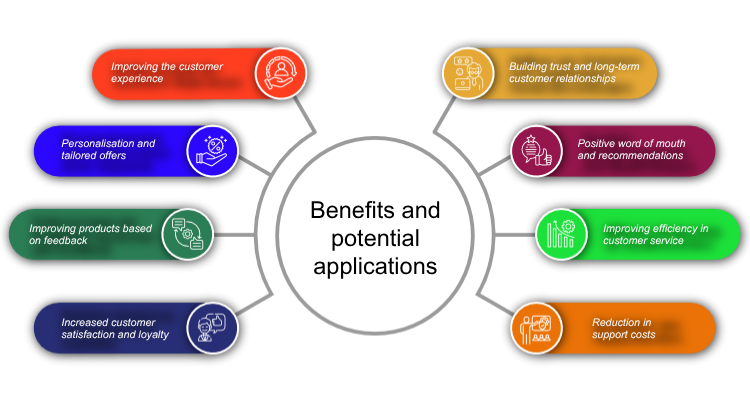
The continuous collection and analysis of feedback enables companies to optimize the customer experience (CX). By understanding customers’ needs, expectations, and problems, targeted improvements can be made. These improvements can affect various aspects of the customer journey, such as the usability of the website or web shop, the quality of customer service, and the efficiency of the purchasing process.
Personalization and Tailored Offers
Through feedback, companies gain valuable insights into the individual preferences and needs of their customers. This information can be used to create personalized experiences and tailored offers. Examples include personalized product recommendations based on customers’ purchasing behavior and preferences, as well as targeted marketing campaigns tailored to customers’ specific interests and needs.
Improving Products and Services Based on Feedback
Feedback provides important indications of the strengths and weaknesses of products and services. By systematically analyzing this feedback, companies can make product improvements, develop new product ideas, and optimize customer service.
Increased Customer Satisfaction and Loyalty
By actively responding to customer feedback and taking appropriate measures, companies increase customer satisfaction and strengthen customer retention. Repeat purchases are likely, as satisfied customers generally remain loyal to the company. The implementation of loyalty programs based on customer feedback and aligned with their needs can strengthen this retention even further.
Building Trust and Long-Term Customer Relationships
Feedback management helps build trust by showing that the company values and takes its customers’ opinions seriously. Long-term customer relationships are generally strengthened through openness to customer feedback and communication about the resulting measures.
Positive Word-of-Mouth and Recommendations
Satisfied customers usually share their positive experiences with others. They recommend the company, service, or product within their personal network and share positive reviews on platforms such as Google and on social media.
Increased Efficiency in Customer Service
By using feedback, companies can often also make their customer service more efficient. Feedback makes it possible to identify recurring problems at an early stage. This can lead to these issues being resolved before they result in major customer complaints. At the same time, the service team can be better trained based on feedback in order to handle frequent questions and problems efficiently.
Reducing Support Costs Through Better-Informed Customers
Better-informed customers require less support, which reduces support costs. Feedback can be incorporated into the creation and provision of FAQs, guides, and tutorials. The use of chatbots and automated systems to process simple inquiries quickly can significantly improve customer information.
Conclusion
Integrating feedback management into the customer journey is crucial for companies in the digital age. By purposefully collecting and analyzing feedback, companies can better understand and respond to the needs of their customers. Feedback management improves the customer experience, increases satisfaction and loyalty, and enables companies to identify and resolve problems at an early stage.
Different types of feedback provide valuable insights that can be used in every phase of the customer journey. The use of suitable methods and technologies leads to a personalized customer experience and better products and services.
Despite challenges such as data silos and data overload, best practices and continuous adjustments offer solutions to overcome these obstacles. Effective feedback management leads to positive customer experiences, strengthens brand loyalty, promotes positive word-of-mouth, and contributes to sustainable business success.