Effective resource planning and management are critical to the success of any business. Financial, material, or staffing bottlenecks can lead to delays, budget overruns, and dissatisfied customers. Strikes and other disruptions affecting ports, rail networks, or road transport can prevent materials from being delivered on time. A wave of illness, such as seasonal flu, may leave too few employees available for scheduled work. Delays caused by other trades can also mean that equipment and personnel are suddenly needed more urgently elsewhere.
Effective resource planning is therefore essential for preventing these and other bottlenecks, as it ensures that the required resources are available at the right time, in the right place, and in the right quantity. A powerful resource planning software solution can provide ideal support in achieving this.
The challenge of resource bottlenecks
Resource bottlenecks are a major challenge for companies and organizations because they can disrupt the smooth execution of projects and day-to-day operations. A resource bottleneck occurs when available resources, whether labor, materials, finances, or time, are not sufficient to meet the requirements of a project or activity.
The impact of bottlenecks can be wide-ranging and severe. They may cause schedule delays because certain tasks cannot be completed on time. This, in turn, can generate additional costs, as extra resources are needed to make up for lost time. In addition, bottlenecks can affect project quality, as employees may be forced to work under pressure or compromise on quality in order to meet deadlines.
The causes of resource bottlenecks vary across industries. In manufacturing, for example, they may result from delays in raw material deliveries or machine failures. In the IT sector, resource bottlenecks may be caused by a shortage of qualified professionals or delays in software development. In construction, bottlenecks may arise due to weather conditions, material supply issues, or inadequate workforce planning.
The role of resource planning software
Resource planning software helps companies plan, allocate, and manage their resources more effectively. While the use of such software is already beneficial for individual projects, it becomes even more valuable when applied in portfolio management or multi-project management. In most cases, resource planning software offers a broad range of functions and tools that enable users to plan, monitor, and optimize various types of resources such as time, costs, and personnel in a structured and efficient way.
Benefits of using resource planning software
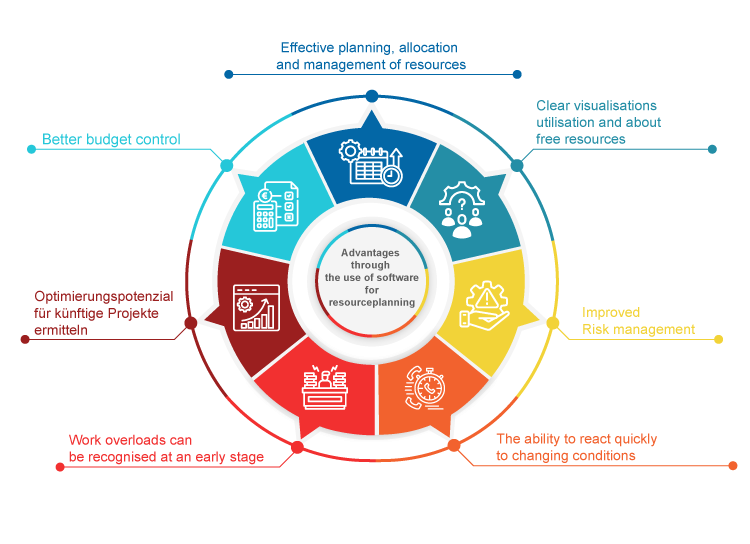
Resource planning software offers a wide range of capabilities that help companies deploy their resources as efficiently as possible. These include, among others:
-
Resource management
-
Resource overview
-
Resource monitoring
-
Resource allocation
-
Workforce scheduling
-
Employee capacity planning
-
Task planning
-
Visual scheduling
-
Workload calculation
-
Project scheduling
-
Capacity planning
-
Project forecasting
-
Project statistics
-
Gantt charts
-
Project budgeting
-
Project analysis
-
Project controlling
-
Project planning
-
Task management
There is a wide range of resource planning tools and platforms available, allowing companies to choose solutions that fit their specific requirements and budgets.
Tips for selecting resource planning software
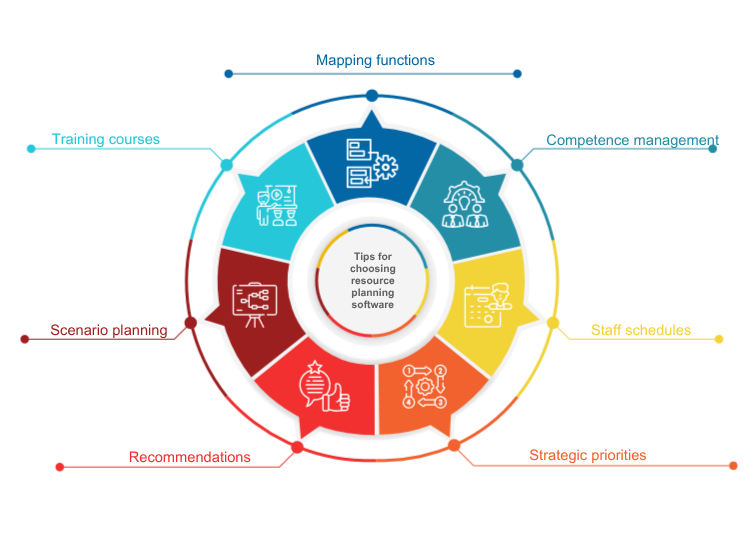
Allocation functions
1. Check whether the software includes features for assigning projects or tasks to people, physical resources, and financial resources. These allocation functions are especially important for effective resource planning.
Skills management
2. When evaluating software, pay close attention to its skills management capabilities. Does it allow you to identify employees based on their specific skills and availability?
Employee plans
3. Does the platform make it possible to create employee schedules and profiles that list individual skills? Does the software offer an easy way to search for skills?
Strategic priorities
4. Check whether the software can display current capacity, upcoming demand, and potential conflicts involving the same resources. Can it also take strategic priorities into account?
Recommendations
5. Does the software provide recommendations on how resources can be used most effectively to deliver the greatest possible value?
Scenario planning
6. Look for what-if scenario planning capabilities. This feature can help you assess whether your company can absorb changes to plans and what suitable adjustments might look like.
Training options
7. How easy is the resource management system to use and learn? Ask the vendor about available tutorials and training options. Also make sure the provider offers high-quality technical and user support.
Further typical functions and additional software selection tips can be found in the SoftGuide software tips on resource planning.
Best practices for avoiding resource bottlenecks:
A thorough analysis of resource requirements and availability at the start of a project makes it possible to identify potential bottlenecks early and take appropriate action.
A realistic assessment of the scope and duration of a project is essential to ensure that sufficient resources are available to achieve the project goals.
It is important to respond flexibly to changing requirements and conditions. Dynamic resource management and allocation help companies ensure that resources are deployed where they are needed most urgently, reducing the risk of bottlenecks.
Open and transparent communication between teams and stakeholders is essential for identifying potential bottlenecks at an early stage and finding solutions together. Close collaboration makes it possible to address problems in time and minimize potential impacts.
Conclusion
Effective resource planning supported by software is crucial to business success, as bottlenecks can lead to delays, budget overruns, and dissatisfied customers. Resource planning software offers a wide range of functions and tools that help companies make the best possible use of their resources. From assigning projects and tasks to monitoring capacity and identifying conflicts, this software enables efficient and structured resource planning and management.
By implementing proven best practices such as identifying resource requirements early, making realistic assessments of project scope and duration, applying flexible resource management, and maintaining open communication, companies can proactively avoid bottlenecks and improve the efficiency of both projects and day-to-day operations. Ultimately, the right resource planning software plays a key role in successfully addressing resource management challenges while also supporting the achievement of long-term business goals.