Why a compelling candidate experience is crucial
In today’s labor market, it is no longer enough to simply post job ads and wait for applications to arrive. Companies should actively strive to create a positive candidate experience – meaning the overall experience applicants have throughout the entire recruiting process. If applicants have a poor experience, this may cause them to drop out during the process or leave negative reviews about the company on relevant online platforms. Conversely, a good candidate experience ensures that applicants retain a positive impression of the company even if they are not hired – and may recommend it to others or apply again at a later date.
Modern recruiting software can help companies optimize their processes and offer applicants a seamless, user-friendly experience. From mobile-optimized application paths and automated communication to intelligent matching algorithms, digital solutions provide numerous ways to make the recruiting process more efficient and attractive.
This article shows which features recruiting software should offer for a candidate-friendly experience and how companies can successfully implement mobile application processes.
How modern recruiting software optimizes the candidate experience
Applicants expect a streamlined and transparent application process. Many talents are used to shopping online with just a few clicks or accessing services within seconds – and this expectation also carries over to the application process. A confirmation of receipt should reach the applicant immediately after submitting the application, and a status update or even an interview invitation should not take too long either. Companies that still rely on outdated methods risk losing top candidates to the competition. This is exactly where modern recruiting software comes in, helping companies optimize the application process and create a positive candidate experience. Both applicants and companies benefit from an efficient and transparent process.
The key benefits of modern recruiting software for the candidate experience
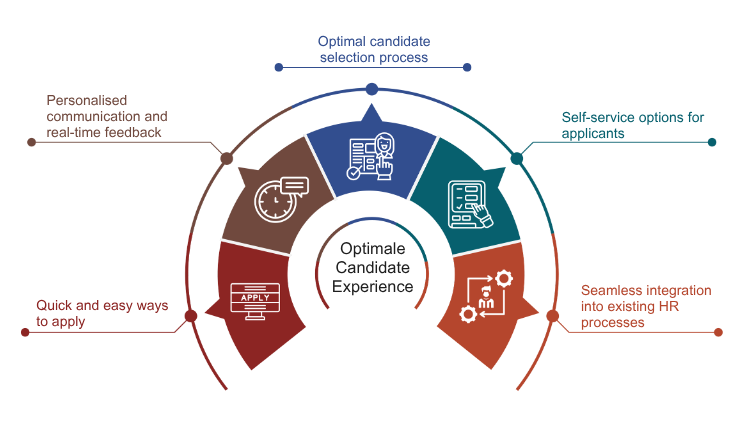
Fast and easy application options
Automated processes generally reduce the time required for applicants and prevent unnecessary obstacles. Modern one-click applications via LinkedIn or Xing simplify the application process. Candidates can submit their documents with just a few clicks.
Personalized communication and real-time feedback
Automated messages and chatbots keep applicants informed about the status of their application at all times. By integrating AI-supported communication solutions, candidates receive, for example, instant confirmations or information about the next steps. These status updates reduce uncertainty for candidates.
Optimal applicant selection process
With intelligent matching algorithms, companies can analyze applicant profiles more efficiently and identify suitable candidates more quickly. This not only accelerates the selection process but also increases the likelihood that applicants will receive feedback sooner.
Self-service options for applicants
Digital recruiting solutions allow applicants to manage their own candidate profiles, upload documents, independently choose interview appointments, or track the status of their application at any time – all without cumbersome email correspondence.
Seamless integration into existing HR processes
Most modern recruiting tools can be integrated easily into existing HR systems and ensure a smooth workflow between applicant management, internal communication, and onboarding processes.
Features for candidate-friendly processes
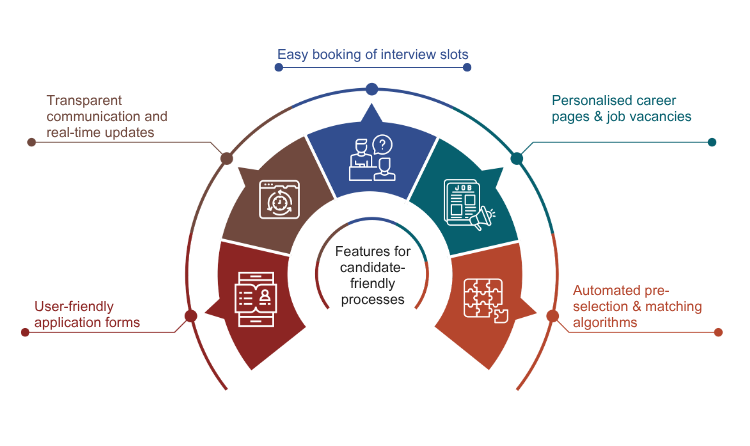
User-friendly application forms
One of the reasons for abandoned applications is forms that are too long or too complex. Recruiting software can significantly simplify this process by:
-
Providing compact forms that only request truly necessary information
-
Automatically extracting data from LinkedIn, Xing, or CV uploads so that applicants do not have to enter everything manually
-
Offering save functions for unfinished applications so they can be completed later
-
Enabling multi-step applications (e.g. with a brief pre-selection instead of a full application)
Transparent communication and real-time updates
Applicants want to know where they stand in the application process – missing feedback or long waiting times are discouraging.
Modern recruiting software improves communication through:
-
Automatic confirmations of receipt after an application is submitted
-
Status updates via email or chatbot, e.g. “Your application is currently under review”
-
Automatic interview scheduling suggestions to reduce waiting times
-
Chatbots or AI-supported assistants that answer common applicant questions in real time
Simple interview scheduling
Coordinating job interviews can be time-consuming for both sides. Digital recruiting tools offer integrated scheduling systems that:
-
Allow applicants to book appointments independently based on available time slots
-
Use automatic calendar integrations to manage internal HR appointments directly
-
Enable video interviews with one click so that no additional tools are required
These features not only save time but also reduce the drop-off rate between application and interview.
Personalized career pages & job postings
Applicants expect an appealing, informative career page tailored to their needs. Modern recruiting software enables:
-
Dynamic content based on visitors’ interests (e.g. suitable positions based on their search)
-
Interactive elements such as employee videos, virtual tours, or testimonials
-
AI-supported job recommendations that suggest relevant positions to applicants
-
Direct application options without registration to minimize barriers
Automated pre-selection & matching algorithms
Many applicants do not receive any feedback for weeks – often because screening is done manually. Modern software can accelerate this process through automated matching technologies:
-
Artificial intelligence evaluates applications based on relevant criteria
-
Automatic pre-selection based on job requirements (e.g. skills, experience, location)
-
Immediate feedback to applicants on whether they are moving to the next round or whether they are not a match for the profile
Mobile application options and their implementation
More than half of all job searches now begin on mobile devices. However, many companies still do not offer a fully mobile application process. This can cause potential candidates to drop out before they even submit their application. With modern recruiting software, companies can ensure that their application processes are optimally designed for mobile devices.
But what makes a good mobile application experience? And how can implementation be carried out successfully?
Mobile-optimized career pages and job postings
A career page that is not mobile-friendly immediately loses appeal. Modern recruiting software ensures that:
-
Career pages and job ads are built with responsive design and displayed optimally on smartphones and tablets
-
Fast loading times are guaranteed – every delay leads to drop-offs
-
Intuitive navigation and clear calls to action (“Apply now”) are in place to keep the application process simple
-
Job filters and search functions are optimized for mobile use so that users can quickly find suitable positions
Best practice: Companies such as Google or Adidas rely on minimalist mobile career pages with clear structures to offer applicants an optimal user experience.
Applying by smartphone – fast and straightforward
Many applicants are on the move or do not have immediate access to their complete résumé. A modern recruiting software solution should therefore enable alternative application methods, such as:
-
One-click applications via LinkedIn, Xing, or Indeed, allowing applicants to use their profile data directly
-
Résumé upload via cloud services (Google Drive, Dropbox, iCloud) to simplify the process
-
Applications without registration to avoid unnecessary barriers
-
AI-supported CV analysis that extracts information from documents and automatically fills out application forms
Best practice: Many large companies offer one-click applications that let applicants import their data from LinkedIn or Xing – a huge time saver.
Chat and messenger integration for applications
Many candidates prefer direct and uncomplicated communication. That is why modern recruiting solutions offer:
-
Applications via WhatsApp, Facebook Messenger, or SMS to create fast contact options
-
Automatic chatbots that guide applicants through the process and answer frequently asked questions
-
Live chat support for applicants to resolve obstacles in real time
Best practice: Some companies are already testing applications via WhatsApp, where applicants simply submit their basic information via chat and receive direct feedback.
Conclusion
An optimal candidate experience is crucial for companies to succeed in the competition for talent. Applicants expect a fast, transparent, and straightforward application process that integrates seamlessly into their digital everyday lives. Long waiting times, complicated forms, and missing mobile options lead to high drop-off rates and can damage the employer brand in the long term.
Modern recruiting software provides a solution by making processes more efficient and supporting applicants through automated communication, one-click applications, AI-supported matching systems, and mobile application options. These digital tools not only improve the applicant experience, but also benefit companies through a shorter time-to-hire and a stronger employer brand.
Recommended actions for companies:
Outlook: The future of digital recruiting
In the coming years, AI, automation, and data-driven recruiting strategies will play an increasingly important role. Companies that adopt modern technologies early and continuously improve their application processes will be more successful in the long term and attract the best talent.
The digitalization of recruiting is not a trend, but a necessity. Companies that offer an outstanding candidate experience have the best chance of positioning themselves as attractive employers and succeeding in the war for talent.