Catering services are used by a wide range of customers. These include nurseries, schools, and nursing homes, as well as companies and private and public clients. As diverse as the customers are, so too are the occasions, the venues in which they take place, the schedule, and above all the catering preferences that must be taken into account. Software for caterers covers functions such as customer management, kitchen and hygiene management, staff scheduling, merchandise management, etc. For individual areas of catering, such as event catering, certain functions of catering software are particularly important. We will take a closer look at these below.
Important Functions of Catering Software for Event Planning
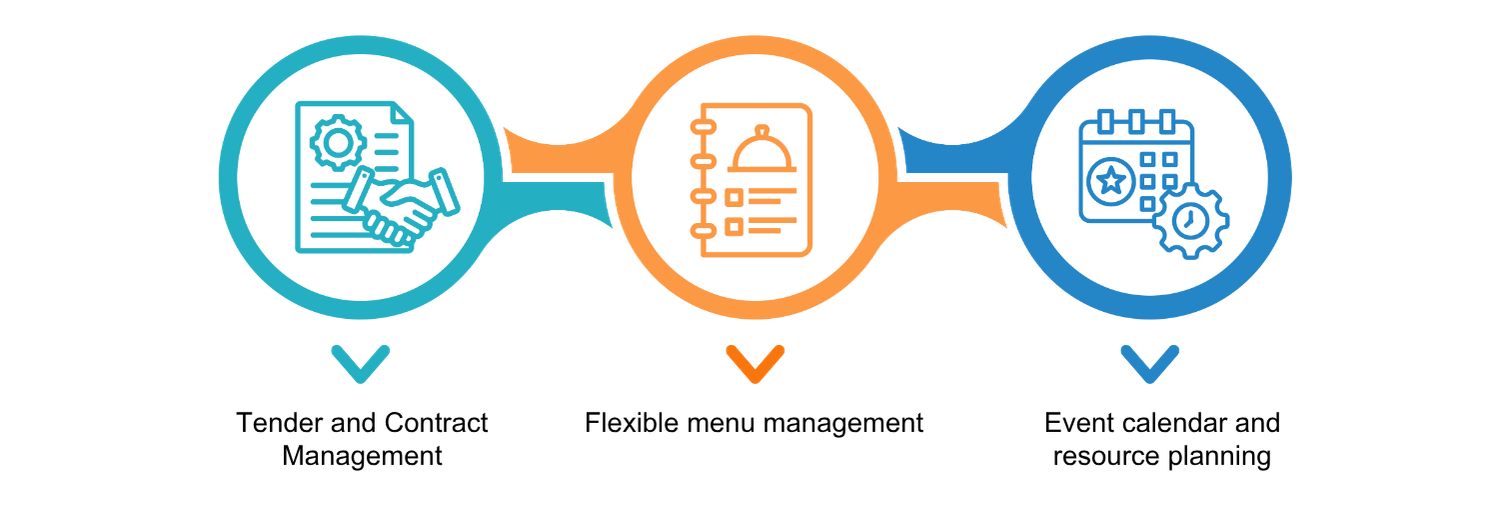
Quotation and Contract Management
An important function of catering software is quotation and contract management. Among other things, it enables the creation and management of tailored quotations and contracts. Every event has different requirements – from menu selection to service delivery. The software helps create precise calculations and present them in attractive quotations. Contract content can be easily managed with the help of the software and adapted to specific event requirements, saving time and minimizing errors. Predefined templates are often available for this purpose.
Flexible Menu Management
Menu planning is one of the central aspects of catering services and often requires short-notice adjustments. The software makes it possible to adapt menus flexibly to the size of the event and the available budget. Catering software often offers functions to easily incorporate seasonal or thematic food options into the planning. Changes to the menu are automatically updated in all relevant documents and systems.
Event Calendar and Resource Planning
Clear scheduling and resource planning are essential for coordinating everyone involved efficiently. The software provides a central overview of all planned events, prevents scheduling conflicts, and simplifies capacity planning. Staff, venues, and equipment can be scheduled and managed efficiently. The software takes existing bookings and availabilities into account to avoid double bookings.
Efficiency Through Automation and Integration
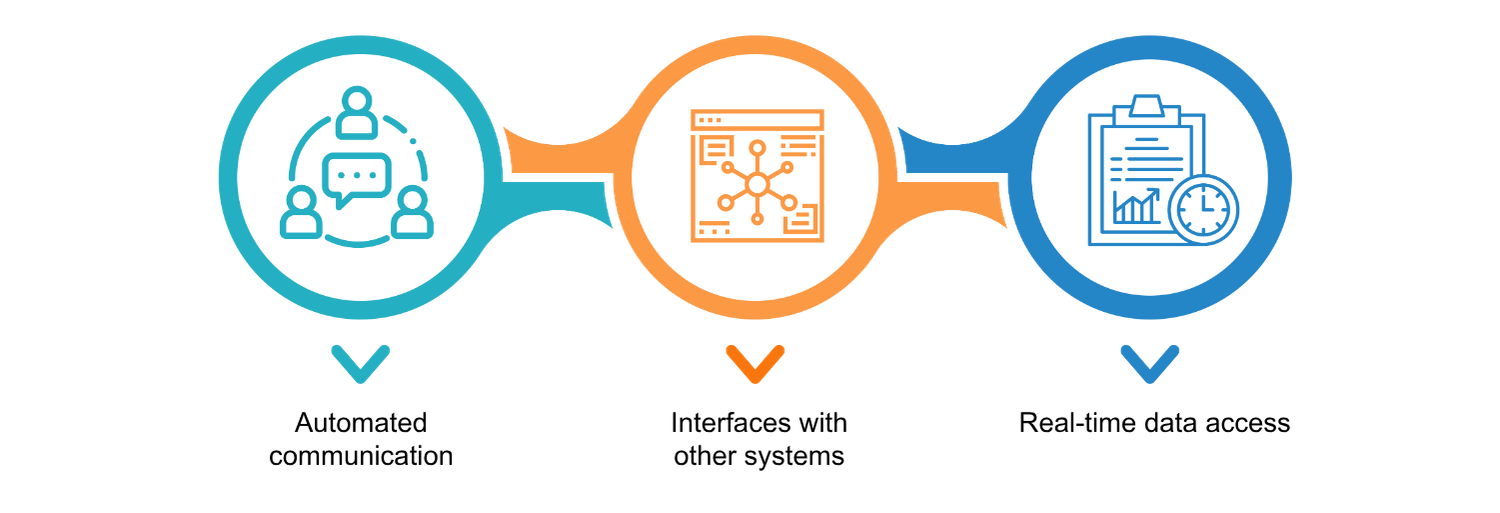
Efficiency and seamless processes play a central role in event planning. Through automation and integration, catering software offers key advantages for accelerating the planning process and minimizing sources of error. Three core areas show how these tools can make day-to-day work easier:
Automated Communication
Communication with customers and internal teams is often time-consuming and can certainly be prone to errors. Catering software automates many of these processes so that information can be passed on quickly and accurately.
For example, customers can automatically receive notifications about schedule changes or reminders of upcoming deadlines. Status updates, task assignments, and reminders can be forwarded automatically to the team to ensure smooth organization.
Interfaces to Other Systems
The strength of modern catering software lies in its ability to connect seamlessly with existing systems and thereby automate data exchange. If the software is linked to the CRM system, for example, customer histories and preferences can be transferred. This enables personalized planning and marketing campaigns.
Automatic synchronization with accounting software ensures complete management of invoices, payments, and costs. This saves time and increases accuracy in financial planning.
The connection to inventory management software ensures that available resources such as ingredients, equipment, or decoration materials are recorded in real time. This helps avoid over-ordering or bottlenecks.
Real-Time Data Access
Real-time data access is crucial for keeping everyone involved up to date at all times and enabling a flexible response to changes. Planning data, schedules, and resource availabilities are centrally available. Everyone on the team knows exactly what is being worked on. Based on real-time data, event managers can make quick, well-founded decisions, for example when there are changes in the process flow or short-notice problems. Via cloud technology, planning data can be accessed at any time and from any device. This is particularly useful when teams are working on site or across different locations.
Flexibility in the Face of Changes
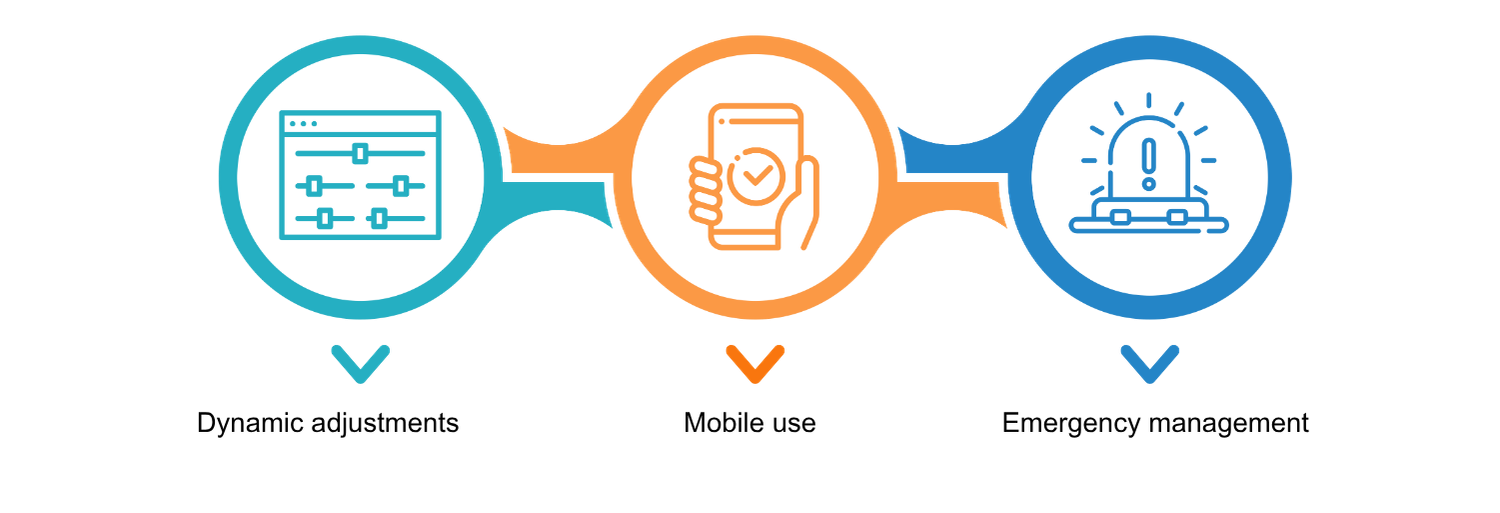
Every event plan is dynamic! Changes are therefore part of everyday business – whether it is a short-notice increase in the number of participants, menu adjustments, or unexpected incidents. Modern catering software enables event managers to respond flexibly and efficiently to such situations and thus ensure the success of the event.
Dynamic Adjustments
Whether the number of participants changes, new menu requests are added, or budget requirements need to be adjusted, catering software makes it possible to record and implement changes efficiently. Changes in the participant list, for example, can immediately be taken into account in all relevant planning areas such as menu and resource planning. New dishes can be added quickly or existing menus modified. Changes are synchronized automatically so that everyone involved is up to date. Automatic recalculations of costs when changes occur ensure that budget requirements can be met.
Mobile Use
Planning and executing events often requires spontaneous decisions on site. The option of using the software on mobile devices, for example via an app or cloud access, supports event managers and teams and ensures up-to-date information at all times. Via mobile apps, status changes can be viewed and communicated immediately, whether for updating the menu selection or coordinating staff. Direct communication options within the app, such as messages or push notifications, make coordination between the event manager and the catering team easier.
Emergency Management
Unforeseen events such as delivery delays, staffing shortages, or sudden changes in the schedule can significantly impair event planning. The software can help manage the impact of unforeseen events by showing which resources or alternative options are available. Changes to the schedule can be made centrally and automatically passed on to everyone involved. Every change is documented so that transparency and traceability are ensured even afterwards.
Precision Through Data Analysis
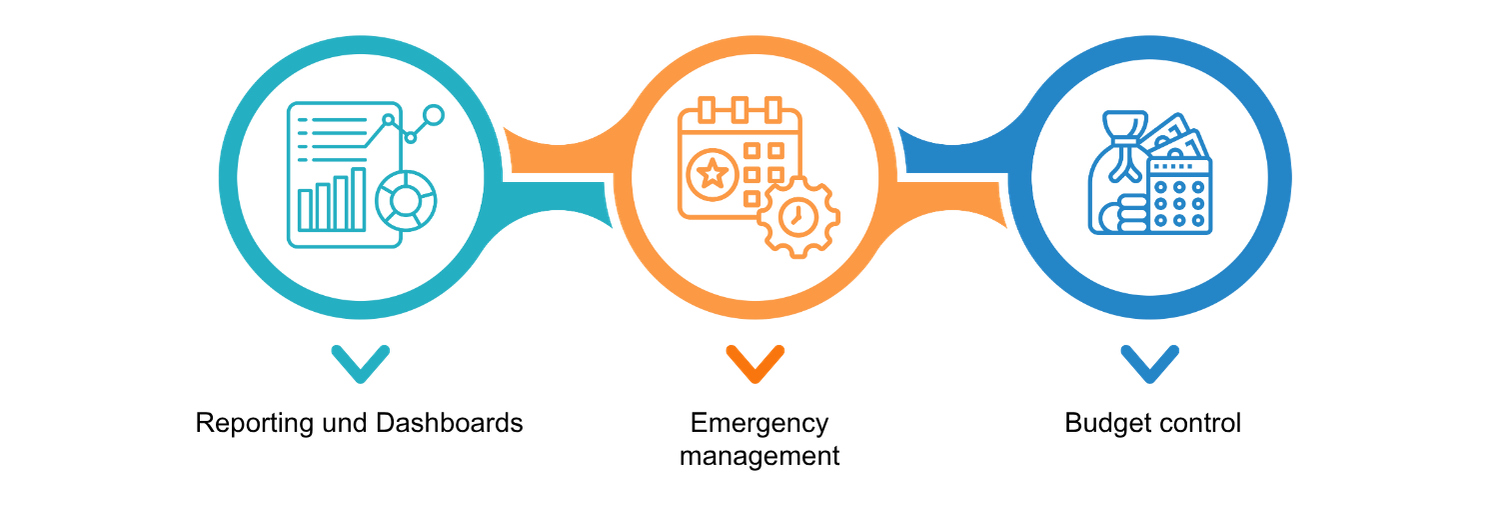
Data analysis is the key to successful event planning. With powerful analysis tools and intuitive dashboards, the software can support not only planning but also the continuous improvement of future events.
Reporting and Dashboards
Clear and visually appealing dashboards give event managers a quick overview of all relevant key figures. All expenses can be recorded and visualized, resulting in a high level of transparency and enabling easy tracking. Dashboards help monitor planning progress, meet milestones, and identify bottlenecks in good time. The availability of resources such as equipment, staff, or inventory is displayed clearly to ensure optimal planning.
Insights from Past Events
Data analysis from past events provides valuable insights for making future events even more successful. Analyses of menu preferences, ordering patterns, and participant feedback help identify trends and align future offerings accordingly. Weak points, such as frequent bottlenecks in specific resources or inefficient processes, become visible and can be optimized in a targeted way. Comparing different events makes it possible to evaluate the effectiveness of measures and identify best practices.
Budget Control
Catering software helps event managers keep a close eye on the budget and avoid unnecessary expenses. All costs, from purchasing to logistics, are recorded and displayed transparently. By analyzing expenditures, potential savings can be identified, for example through more cost-effective suppliers or more efficient use of resources. Budgets can be calculated precisely and compared with the actual costs incurred in order to avoid financial surprises.
Conclusion
Digitalization in catering and event planning offers significant advantages through specialized software solutions. Catering software enables precise planning, flexible adjustments, and optimized processes. Functions such as quotation and contract management, flexible menu management, and real-time data access increase efficiency and transparency. In particular, integration with other systems and the option of mobile use ensure that teams on site and remote teams can work together optimally.
The automation of communication and administrative tasks reduces errors and saves time, while powerful analysis tools enable continuous improvement. By making targeted use of such software, caterers and event managers can not only meet the growing demands of their customers, but also sustainably enhance their own competitiveness. In this way, the combination of flexibility and precision becomes a success factor in modern event planning.