We are seeing them more and more often in restaurants: small autonomous service robots. Sometimes they are used to transport cleared dishes back to the kitchen; other times, they deliver finished meals to a service station or even directly to the table. In some gastronomy businesses, they are already taking orders at the table as well.
However, digitalization in the gastronomy industry is about far more than the advanced use of robots. Above all, it begins with the use of gastronomy software to optimize operations, enhance the customer experience, and increase efficiency.
In practice, this typically includes digital POS systems, mobile ordering solutions, automated inventory management, and innovative software for staff and resource planning. These developments enable gastronomy businesses to make their processes not only faster and more cost-effective, but also more flexible and more responsive to customer needs.
Improving Efficiency in the Gastronomy Industry Through Digitalization
.png)
Optimization of Ordering Processes
Digital POS systems and mobile ordering devices have transformed ordering processes in the gastronomy industry. Modern POS systems not only record orders, but also offer interfaces to inventory management, payment services, and delivery platforms. Service staff can take orders directly at the table using tablets or mobile ordering devices, reducing processing times and minimizing errors. Orders are automatically forwarded to the kitchen or bar, creating a more efficient workflow and shortening waiting times for guests.
Automation of Inventory Management
Automating inventory management makes a significant contribution to improving efficiency. By using software for digital stock monitoring, restaurant operators can view inventory levels in real time. The system automatically records every withdrawal and delivery, providing an accurate and up-to-date overview of stock levels. This helps prevent shortages and overstocking, lowers operating costs, and reduces waste. Modern inventory management systems can be configured to trigger reorders automatically when predefined thresholds are reached.
Simplified Workforce Management
The use of digital staff scheduling tools makes managing shifts, breaks, and working hours much easier. Digital tools allow schedules to be created clearly and flexibly. Integrated time-tracking systems record working hours digitally, simplifying payroll and helping to avoid errors in wage calculations. In addition, these systems support better compliance with legal requirements, for example regarding working hours and break regulations.
Faster Billing Processes
Integrating POS systems with modern payment solutions speeds up billing. Customers can pay seamlessly using a variety of methods, including credit cards, contactless payments, mobile wallets, or online payment solutions. Automated revenue posting saves time and minimizes errors. In addition, POS systems are often linked to accounting software, which simplifies financial processing and tax reporting.
Data-Driven Decision-Making
Digitalization gives gastronomy businesses the opportunity to analyze large volumes of sales data. With the right tools, sales figures can be viewed in real time, enabling a rapid response to current trends and changes in the business environment. Customer preferences can also be analyzed in order to tailor offerings more precisely to guest needs. For example, restaurateurs can identify which dishes are particularly popular or which times of day generate the highest revenue.
Based on these insights, menus can be optimized by removing less popular dishes and promoting high-performing items more strongly. This data-driven approach helps reduce costs while increasing revenue. In addition, gastronomy businesses can create personalized offers for their customers by using their order history. For example, regular guests could receive special discounts or personalized recommendations via an app.
Trends and Future Outlook in the Gastronomy Industry
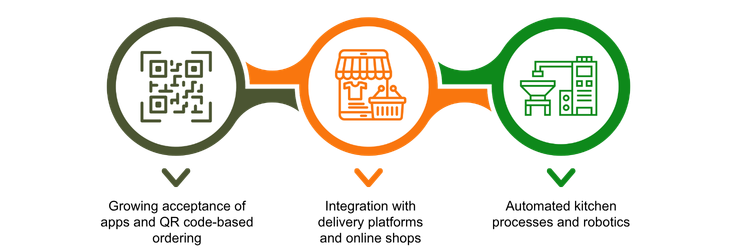
Growing Acceptance of App- and QR Code-Based Ordering
Mobile ordering systems and self-service terminals are a growing trend in the gastronomy industry. More and more restaurants are giving guests the option to place orders directly from their smartphones via apps or QR code-based systems. This technology reduces waiting times and improves service quality, as orders are sent straight to the kitchen without requiring staff intervention. The growing acceptance of these solutions, especially since the COVID-19 pandemic, shows that customers are increasingly willing to use digital tools to make their restaurant visits more convenient.
Integration with Delivery Platforms and Online Shops
The increasing digitalization of the gastronomy sector has also led to closer integration with external delivery platforms. Restaurants are increasingly connecting delivery services such as Lieferando and Uber Eats to their restaurant management systems in order to expand their reach and unlock additional revenue streams. These systems make it possible to receive orders directly from delivery platforms and integrate them seamlessly into internal workflows without manual intervention. This increases efficiency and speeds up the processing of delivery orders.
Automated Kitchen Processes and Robotics
Automation is becoming increasingly common in restaurant kitchens. Robots are taking over more and more tasks in food preparation, particularly in fast-food restaurants and large-scale kitchens. Robots are also being used more frequently in restaurants to deliver dishes to guests, return used dishes to the kitchen, or even take orders directly at the table. The use of these technologies reduces the workload for staff, which is a major advantage in times of labor shortages. Digital systems also help optimize kitchen workflows.
Conclusion
Digitalization in the gastronomy industry has the potential to significantly increase efficiency and flexibility in restaurants. Digital POS systems, automated inventory management, and innovative workforce management tools streamline operations and reduce costs. Trends such as mobile ordering systems, integration with delivery platforms, and the use of robots to support service staff highlight the growing influence of technological solutions. Data-driven decision-making also enables businesses to tailor their offerings more precisely to customer preferences. Overall, digitalization offers major benefits for both gastronomy operators and guests, and it will continue to play an increasingly important role in the future.