Flexibility combined with efficiency is essential for organizing a successful event. For this reason, software solutions are naturally used in event management for all types of events. All-in-one event management software solutions are becoming increasingly important because they significantly reduce the complexity of events through innovative and integrative tools. They combine all the functions that organizers need – from attendee registration to follow-up – and provide the central platform for managing events effectively.
In this article, we provide you with a comprehensive overview of the core functions, technological innovations, and latest trends in event management software. We also take a look at how modern solutions integrate aspects such as sustainability, data protection, and user-friendliness in order to meet the requirements of event organizers.
Core Functions of Modern All-in-One Event Management Software
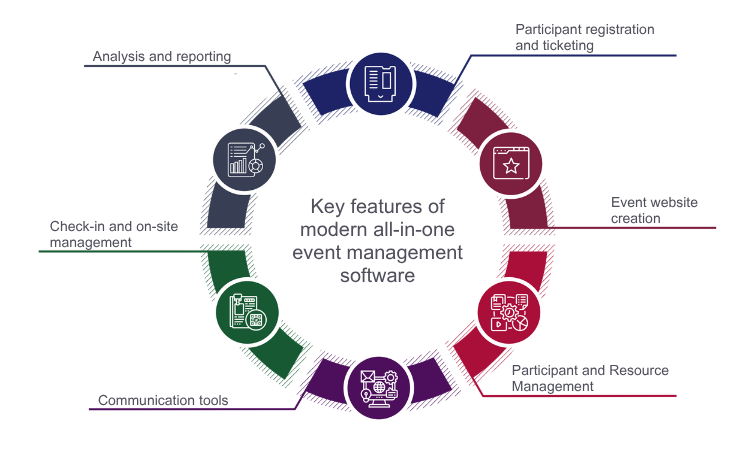
All-in-One Event Management Software includes a wide range of functions required for the successful planning, execution, and analysis of events. Below, we present the core functions of modern event management software.
Attendee Registration and Ticketing
An event only becomes a “real” event through its participants. Attendees should be able to register for events easily and quickly, receive confirmation emails, and more. Modern all-in-one event management software therefore usually offers flexible, user-friendly registration processes for different types of events. With customizable registration forms, ticket categories, and various payment options, it covers the key requirements. Standards such as automated confirmation emails, discount systems, and intelligent quota management ensure efficient attendee management.
Event Website Creation
Whether a trade fair, webinar, concert, reading, etc. – every event comes with information that should be presented on an event website. All-in-one event management software enables the quick and uncomplicated creation of professional websites thanks to integrated drag-and-drop editors, responsive designs, and multilingual support – usually without any programming knowledge. Prebuilt templates and comprehensive customization options ensure an appealing presentation of event information and support brand identity.
Attendee and Resource Management
Depending on the type and size of the event, the organizer must manage not only attendees but also setup personnel, support staff, security staff, catering staff, assistants, and administrative personnel. Powerful event management software enables the centralized management of attendee data, bookings, and resources. Functions such as contact management, attendee profiles, capacity planning, and seat quotas create clarity and structure. Automated reminders and communication features simplify organization and improve efficiency.
Communication Tools
Integrated communication solutions promote direct dialogue with attendees. Email marketing, personalized invitations, survey tools, and messaging functions support event planning. Automated notifications and reminders increase attendee engagement and ensure a smooth flow of information.
Check-In and On-Site Management
Digital check-in systems with barcode or QR code scanning speed up the on-site registration process. Mobile apps and real-time tracking ensure efficient on-site management. In addition, features such as access controls, visitor statistics, and real-time overviews simplify organization and increase transparency for event organizers.
Analysis and Reporting
Comprehensive analysis and reporting functions provide valuable insights into event performance. Dashboards with key performance indicators (KPIs), attendee statistics, and financial reports enable a well-founded evaluation and optimization of future events. Export and visualization options simplify reporting and the presentation of results.
Technological Innovations in Event Management Software
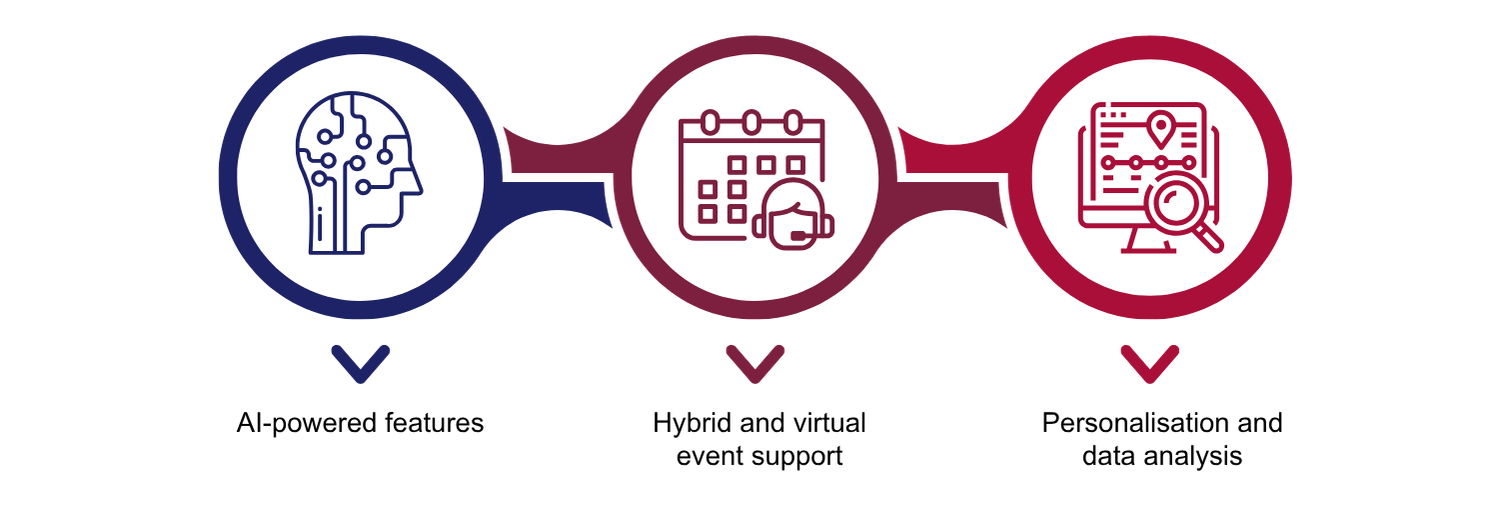
AI-Powered Features
Through the use of artificial intelligence, event management can better adapt to the personalization of offers and events. AI algorithms optimize attendee recommendations, personalize agendas, and improve networking. Chatbots provide round-the-clock support for inquiries, while predictive analytics help with resource planning. AI also enables automated translations for multilingual events and intelligent content suggestions based on attendee interests.
Hybrid and Virtual Event Support
The latest event management software offers seamless integration of physical and digital event components. Streaming platforms with interactive features, virtual exhibition spaces, and digital networking tools make it possible to reach a broad audience. Advanced technologies such as VR and AR create immersive experiences for remote participants. The software also supports the synchronization of live and online content as well as the management of hybrid attendee lists.
Personalization and Data Analysis
Data-driven personalization is at the heart of current event management software. Advanced analytics tools process attendee data in real time to create tailored experiences. From personalized agendas and individualized content recommendations to targeted networking suggestions – the software uses data to maximize the value of the event for each attendee. At the same time, detailed analyses provide valuable insights for continuous improvements and ROI measurement.
Sustainability Aspects in Event Management Software
Sustainability now plays a central role in almost all areas of business and everyday life. Providers of event management software are increasingly taking this into account and integrating more and more functions to support environmentally friendly events. These tools help organizers not only reduce the ecological footprint of their events, but also ensure compliance with sustainability standards.
Tools for Measuring and Reducing the Ecological Footprint
State-of-the-art event management software includes tools for calculating and minimizing the environmental impact of events.
-
CO2 Calculator
The CO2 calculators make it possible to estimate and track the carbon emissions of an event, including factors such as attendee travel, energy consumption, and catering. -
Resource Management
Resource management can support the efficient planning and use of materials and thus help reduce waste. -
Digital Alternatives
The use of digital tickets, QR codes, and mobile event apps supports the reduction of the ecological footprint.
Security and Data Protection
In the digital era of event management, security and data protection are of utmost importance. Modern all-in-one event management software must not only be efficient, but also meet the highest standards in data protection and security.
GDPR Compliance
Compliance with the General Data Protection Regulation (GDPR) is essential for event management software. The principle of data minimization should already be embedded in the software. Only the data necessary for the purpose of the event is collected and processed. The software should provide functions for obtaining and managing attendee consent for data processing. Data transparency is also an important aspect. Attendees should be able to access their stored data easily and have it changed or deleted if necessary. Automated logging of all data protection-relevant processes for proof of GDPR compliance should also be available.
Integration and Interfaces
All-in-one event management software must offer flexible interfaces and integration options in order to be efficiently integrated into existing IT landscapes.
Connection with CRM Systems
The integration of event management software with Customer Relationship Management (CRM) systems offers numerous advantages:
-
Data synchronization
-
360-degree customer view
-
Automated lead generation
-
Campaign management
API Capabilities
Modern event management software offers extensive API interfaces (Application Programming Interface) for flexible integrations:
-
Open APIs
-
Real-time data exchange
-
Customizable workflows
-
Scalability
User-Friendliness and Customizability
Modern event management software must not only be powerful, but also user-friendly and flexible. Acceptance and efficiency depend largely on the user interface and customization options.
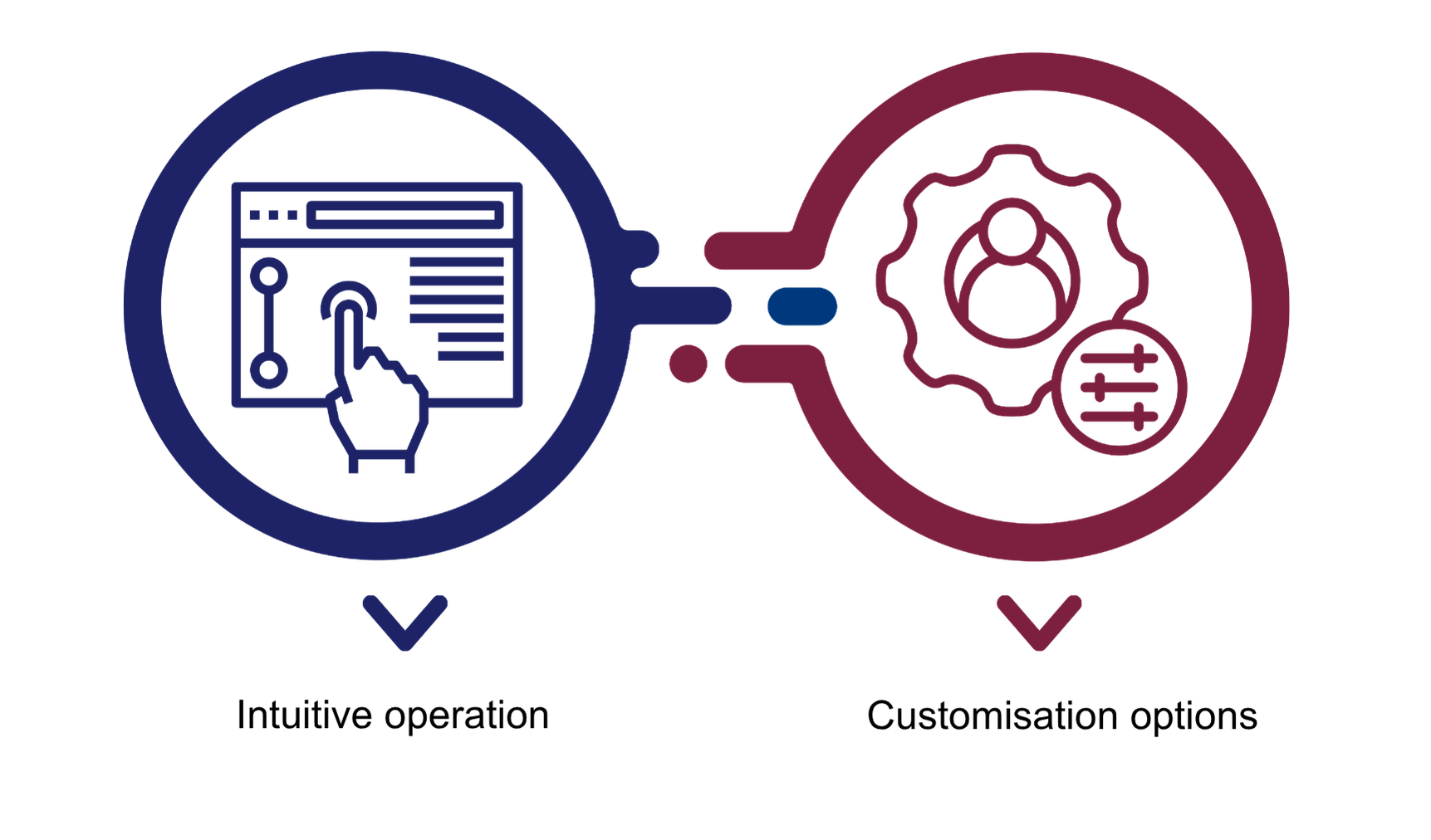
Intuitive Operation
The user interface of current event management software is designed for maximum ease of use. Clear navigation systems with logical menu structures enable even less technically experienced employees to find their way around quickly. Drag-and-drop functions simplify complex tasks such as event planning and resource management. Responsive designs ensure optimal use on various devices such as smartphones, tablets, and desktops. Context-related help and tooltips support users directly during operation.
Individual Customization Options
Flexible configuration options allow the software to be used in a tailored way. White labeling enables full adaptation to corporate designs and brand identity. A modular system architecture allows functions to be added or removed depending on business needs. Individual workflows and automation rules can be created without programming knowledge. Customizable dashboards and reports provide relevant information at a glance. Multilingual interfaces and local settings support international event organization. The combination of user-friendliness and adaptability makes modern event management software a powerful and flexible tool for event organizers.
Conclusion
The article shows how all-in-one event management software solutions can significantly reduce the complexity of modern event organization. The functions presented – from attendee registration and website creation to analytics and sustainability tools – illustrate the broad range of applications for these technologies. Particularly noteworthy are the technological innovations such as AI-powered personalization, hybrid and virtual event support, as well as the integration of sustainability and security standards.
The digitalization of event management not only enables greater efficiency, but also the sustainable and future-proof design of events. Organizers benefit from a central platform that covers all aspects of event management while placing innovation and adaptability at the forefront.