BIM Software
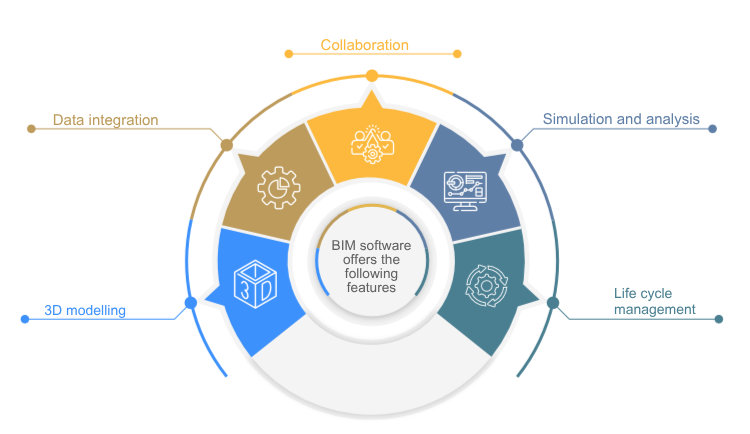
Building Information Modeling (BIM) is a digital method for planning, executing, and managing construction projects. BIM software enables the creation of a detailed, three-dimensional model of a building that contains comprehensive information about the geometric and functional properties of the structure. These models are not just visual representations, but also include important data on materials, construction phases, costs, and lifecycle management.
Key BIM software features include:
Digital Twin
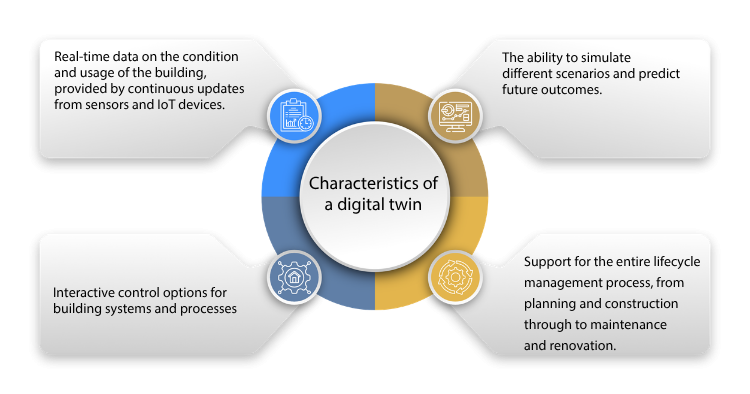
A digital twin is a digital representation of a physical object, system, or process that exchanges and interacts with data in real time. In construction, the digital twin refers to a digital model of a building that is continuously updated with real-time data and reflects the current condition, operating conditions, and performance metrics of the building.
Differences and Similarities Between BIM and the Digital Twin
Differences
Data Updating
BIM models are static and represent the design and planning of a building. Digital twins, on the other hand, are dynamic and are continuously updated with real-time data.
Application Area
BIM is mainly used in the planning and construction phases, while digital twins play a key role primarily during the operation and maintenance of a building.
Data Sources
BIM models are based on planned and constructed data. Digital twins additionally integrate data from sensors and other real-time sources.
Similarities
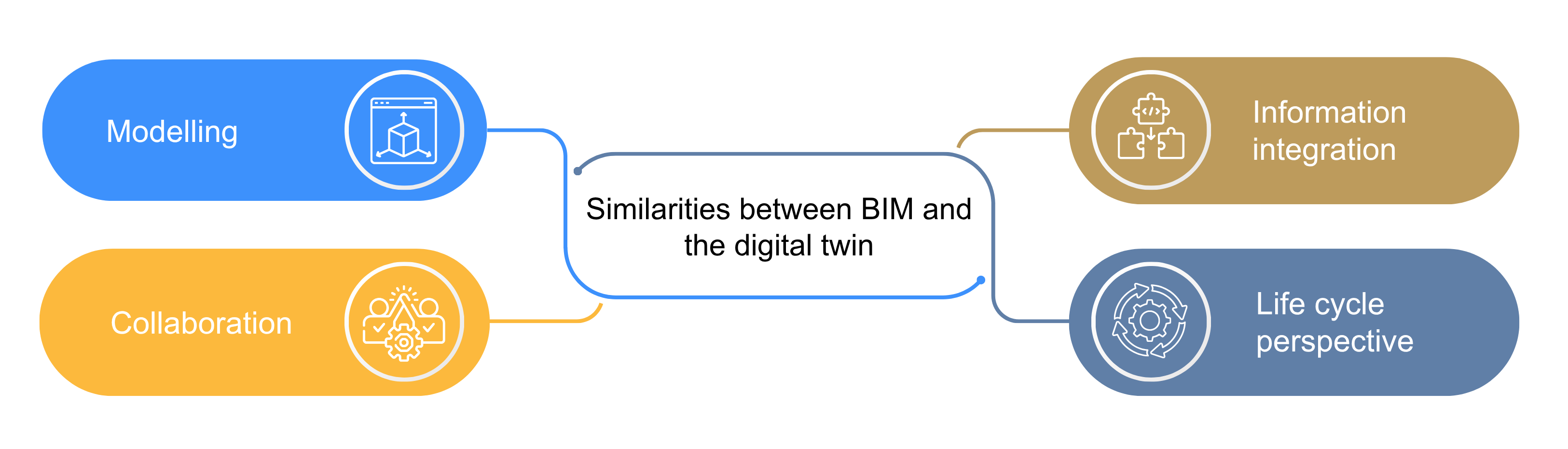
Modeling
Both BIM and digital twins use 3D models to represent a building.
Information Integration
Both technologies integrate different types of data and information to provide a comprehensive picture of the building.
Collaboration
Both promote collaboration between different disciplines and stakeholders in the construction industry.
Lifecycle Perspective
Both BIM and digital twins support the lifecycle management of buildings, albeit in different phases and with different focuses.
How BIM Software Is Used to Create Digital Twins
BIM software forms the foundation for creating digital twins. Architects and engineers create a detailed 3D model of the building with the help of BIM software. This model includes information on all physical and functional properties of the building, including materials, dimensions, technical specifications, and construction phases. To create the digital twin, the BIM model is linked to real-time data sources. This can be done by integrating sensors, IoT devices, and other data acquisition technologies. These devices continuously collect data on the condition, usage, and performance metrics of the building and transfer this data to the digital model. The collected data is stored and managed in a central database. Analysis and simulation tools within the BIM software or specialized digital twin platforms enable the evaluation and interpretation of the data in order to make informed decisions and carry out optimizations.
Benefits of Using BIM Software and the Digital Twin
1. Improved Planning and Visualization of Construction Projects
Precise 3D Models
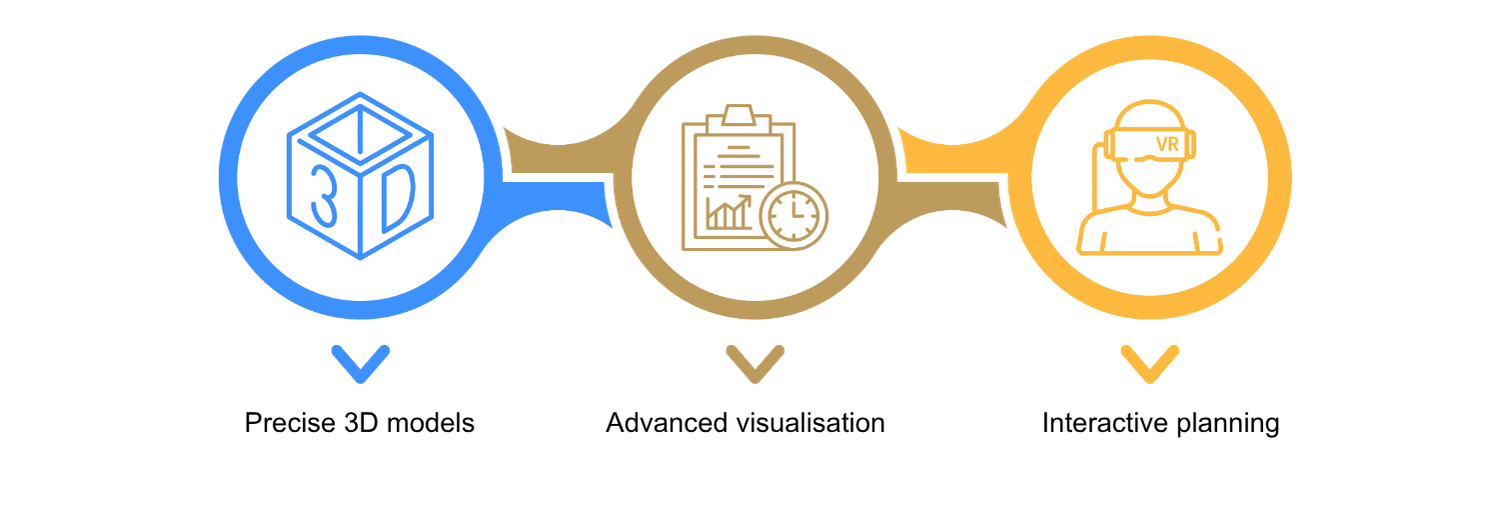
BIM software enables the creation of detailed 3D models that include all physical and functional aspects of a building. These models provide a realistic representation of the project, making planning and communication between architects, engineers, and clients easier.
Enhanced Visualization
Digital twins use real-time data to continuously update and improve the building model. This enables the simulation of various scenarios and the visualization of potential problems or changes before they are implemented in the real world.
Interactive Planning
By integrating Virtual Reality (VR) and Augmented Reality (AR), stakeholders can explore the building virtually and visualize changes in real time. This improves understanding and collaboration among everyone involved and helps avoid misunderstandings and errors.
2. Optimization of the Construction Process and Reduction of Errors and Costs
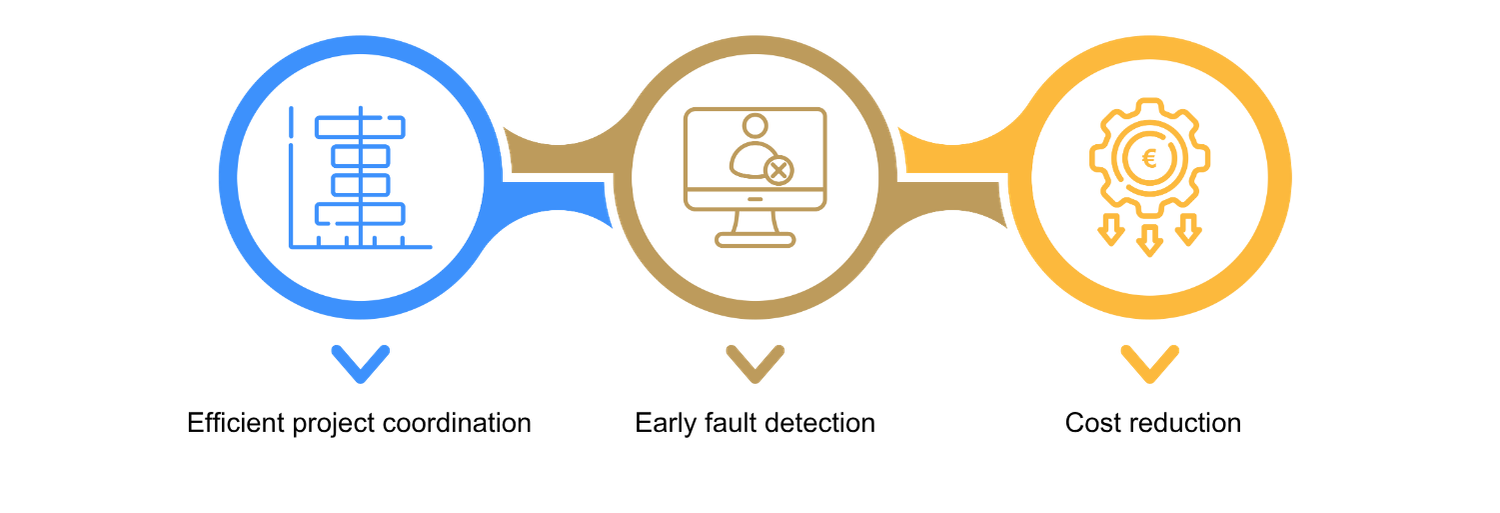
Efficient Project Coordination
BIM software enables seamless collaboration between different disciplines (architecture, engineering, construction) and improves the coordination of construction processes. Digital twins provide real-time information and updates that enable precise monitoring and control of the construction project.
Early Error Detection
Through detailed modeling and simulation, potential problems and clashes can be identified and resolved early. This reduces rework and delays and leads to more efficient construction execution.
Cost Reduction
Improved planning and error prevention lead to a reduction in the overall project costs. Optimized construction workflows and more efficient use of resources also contribute to lower costs.
3. Improved Maintenance and Management of Buildings After Completion
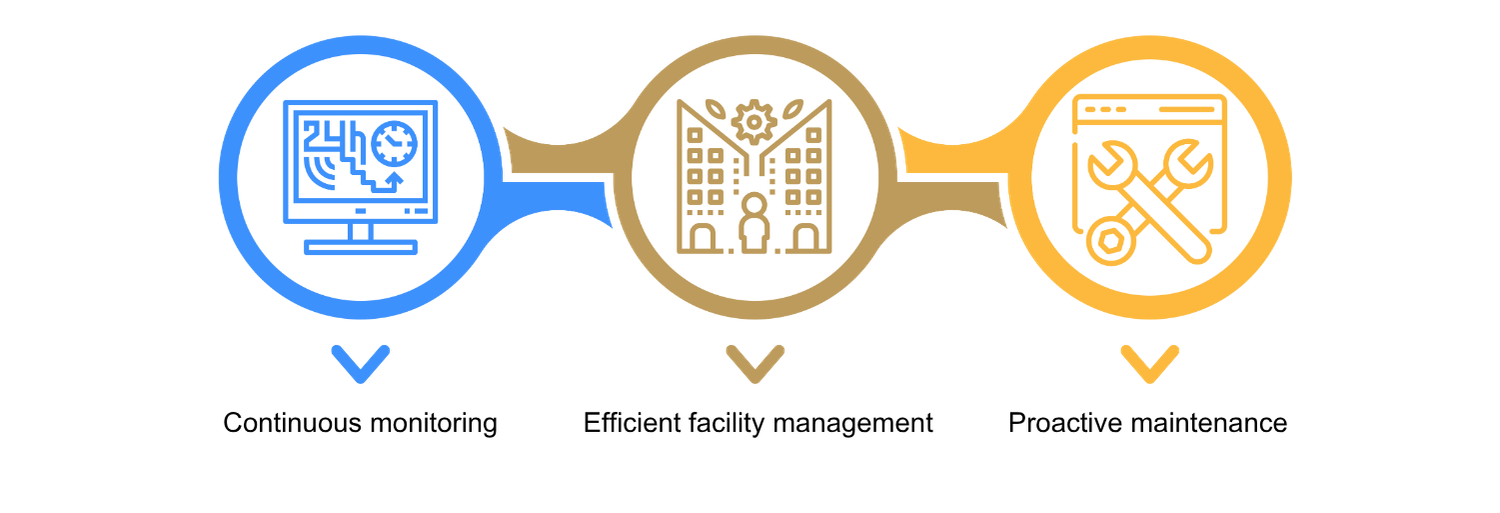
Continuous Monitoring
Digital twins enable continuous monitoring of the building's condition and performance through real-time data. Sensors and IoT devices constantly provide up-to-date information that can be used for maintenance and servicing.
Efficient Facility Management
The integration of BIM data into facility management makes it easier to manage buildings and systems. Maintenance plans, repair histories, and technical specifications are available at all times, increasing the efficiency and accuracy of maintenance work.
Proactive Maintenance
By analyzing real-time data, potential problems can be identified and resolved early before they lead to major failures. This extends the service life of buildings and reduces overall repair and maintenance costs.
4. Greater Sustainability and More Efficient Use of Resources
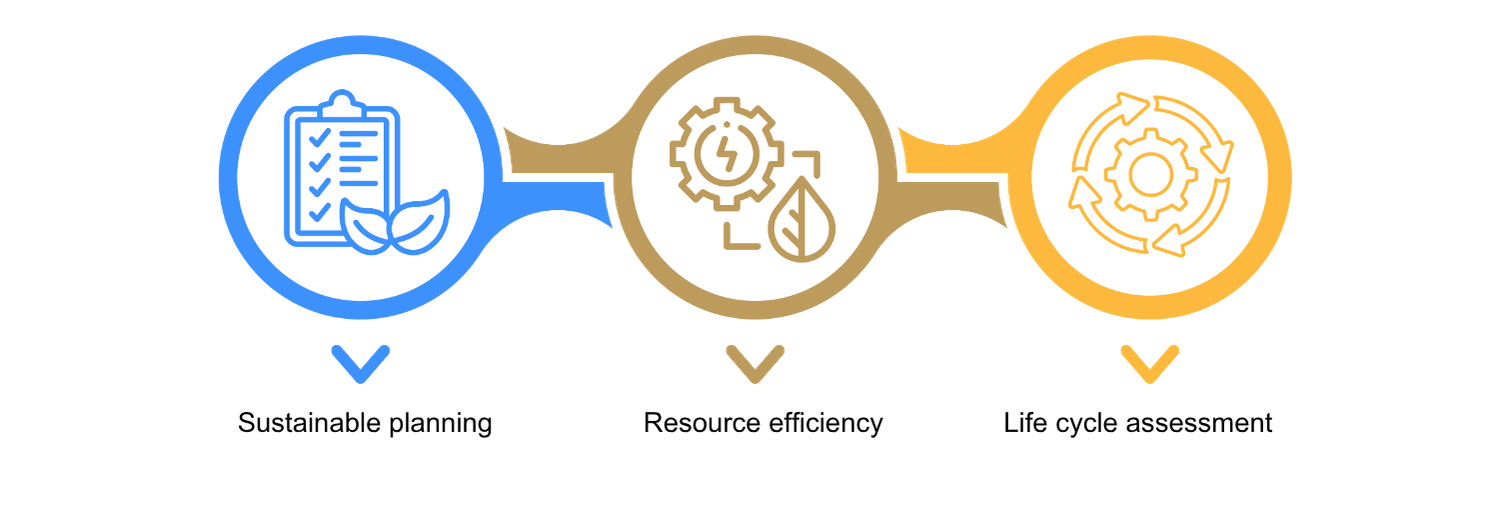
Sustainable Planning
BIM software enables the simulation and analysis of energy efficiency and environmental compatibility already in the planning phase. Digital twins provide accurate data for optimizing energy consumption and implementing sustainable solutions.
Resource Efficiency
Precise modeling and monitoring make it possible to use resources such as materials, water, and energy more efficiently. This leads to a reduction in the building's ecological footprint.
Lifecycle Assessment
The use of digital twins enables a holistic view of the entire lifecycle of a building. This supports sustainable decisions and measures in all phases, from planning and construction to use and deconstruction.
Examples of BIM and the Digital Twin in Practice
Marina Bay Sands, Singapore
Marina Bay Sands is an iconic structure in Singapore consisting of three towers, a SkyPark, and one of the largest hotels in the world. The architects and engineers used BIM software to create detailed 3D models of the entire complex. These models were combined with real-time data from sensors and IoT devices to create a digital twin of the structure. By using BIM and the digital twin, the project team was able to significantly improve planning and coordination, resulting in reduced construction time and costs. The digital twin continues to be used for the maintenance and management of the building, optimizing energy consumption and lowering operating costs.
Heathrow Terminal 5, London
During the construction of the new terminal at Heathrow Airport, both BIM software and digital twins were used extensively. Through the use of BIM, detailed models were created that facilitated the planning and coordination of the complex construction processes. The digital twin of the terminal enabled real-time monitoring and analysis of the construction work, resulting in a significant reduction in construction errors and delays. After completion, the digital twin continues to be used for facility management and maintenance of the terminal.
Louvre Abu Dhabi, United Arab Emirates
The Louvre Abu Dhabi is an art museum on Saadiyat Island in Abu Dhabi. The project was technically demanding and required innovative solutions. The planners used BIM software to model and coordinate the museum's complex architectural elements. A digital twin was created to optimize site logistics and monitor construction progress. The use of BIM and the digital twin helped shorten the construction time and improve the quality of execution. The digital twin continues to be used for the management and maintenance of the museum.
Challenges and Future Prospects
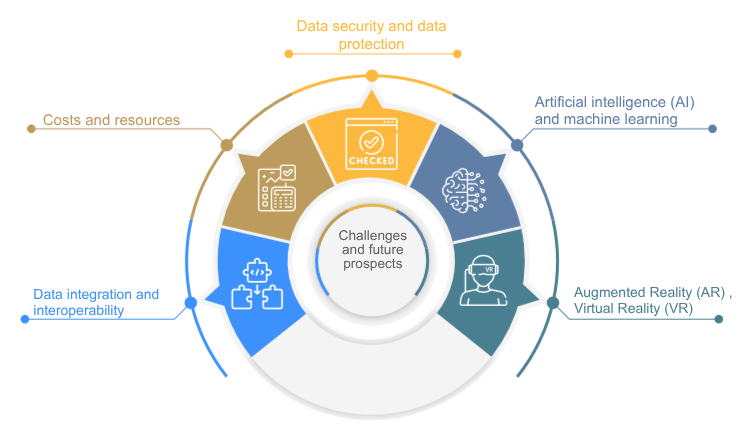
Costs and Resources
The implementation of BIM software and digital twins requires considerable investment in software, hardware, and training. Smaller companies or projects with limited budgets may have difficulty providing the necessary resources. The long-term benefits must be communicated clearly in order to increase willingness to invest.
Data Integration and Interoperability
One of the greatest challenges in implementing BIM software and digital twins is the integration and interoperability of data from different sources and systems. Different software solutions and data formats can make seamless collaboration and data exchange more difficult. The development and compliance with standards such as IFC (Industry Foundation Classes) and BIM Level 2 are crucial to overcoming these challenges.
Data Security and Data Protection
The collection, storage, and transfer of large amounts of real-time data involve significant security and privacy risks. Construction companies must implement robust security measures to prevent data loss and cyberattacks. Data protection regulations and regulatory requirements must be strictly complied with.
Artificial Intelligence (AI) and Machine Learning
The integration of AI and machine learning into BIM software and digital twins enables the automation and optimization of planning and construction processes. AI-supported analyses can identify patterns in the data and suggest predictive maintenance strategies in order to avoid failures and extend the lifespan of structures.
Augmented Reality (AR) and Virtual Reality (VR)
AR and VR offer new possibilities for visualizing and interacting with BIM models and digital twins. These technologies enable immersive experiences that improve planning, training, and collaboration. Clients and planners can carry out virtual walkthroughs and visualize changes in real time.
Conclusion
BIM software provides a solid foundation for creating detailed 3D models that integrate comprehensive data on the physical and functional properties of a building. By linking these models with real-time data, a digital twin is created that continuously reflects the current condition, operating conditions, and performance metrics of the building. The combination of both technologies offers numerous benefits: from improved planning and visualization to optimized construction processes, efficient facility management, and sustainable resource use. Overall, BIM software and digital twins are key tools for a future-oriented, efficient, and sustainable construction industry.