
ATAMYA Product Cloud
ATAMYA - The multi-domain PIM for modern system landscapesUpdated on 16. Jun 2026 by Software Vendor
ATAMYA Product Cloud is a cloud-native solution for product information management that enables companies to centrally capture, structure, enrich, check and provide product data across channels. The software is aimed at companies that want to consolidate their product information from different sources, increase data quality and make product content available more quickly for e-commerce, sales, marketing, print and international markets.
The focus is on a central database for product information, media data, features, variants, categories, translations and channel-related content. This allows you to consolidate scattered databases from spreadsheets, ERP, PLM, CRM or other systems in a standardized environment. For your teams, this means less duplicate maintenance, a better overview, clearer responsibilities and greater consistency in product communication.
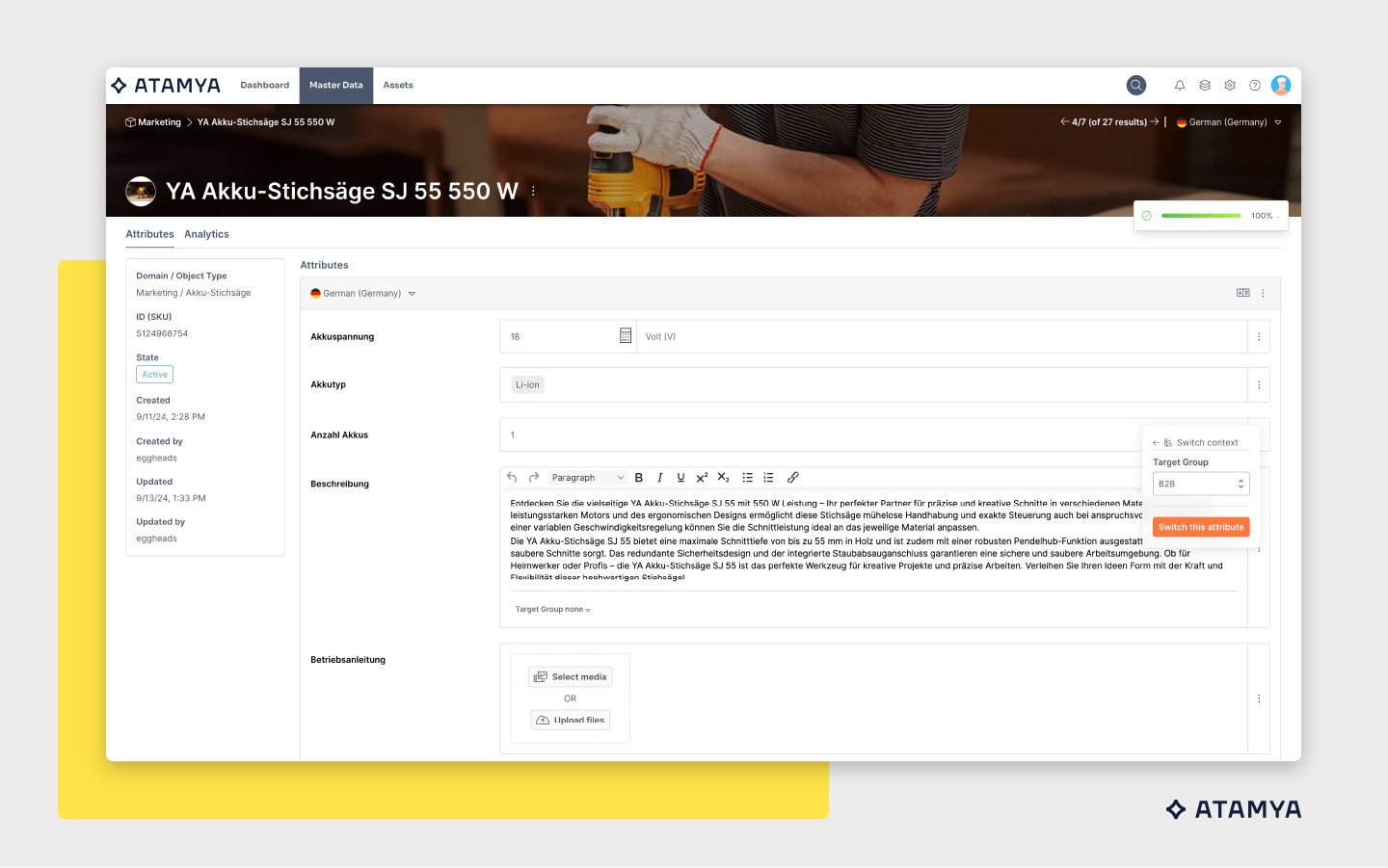
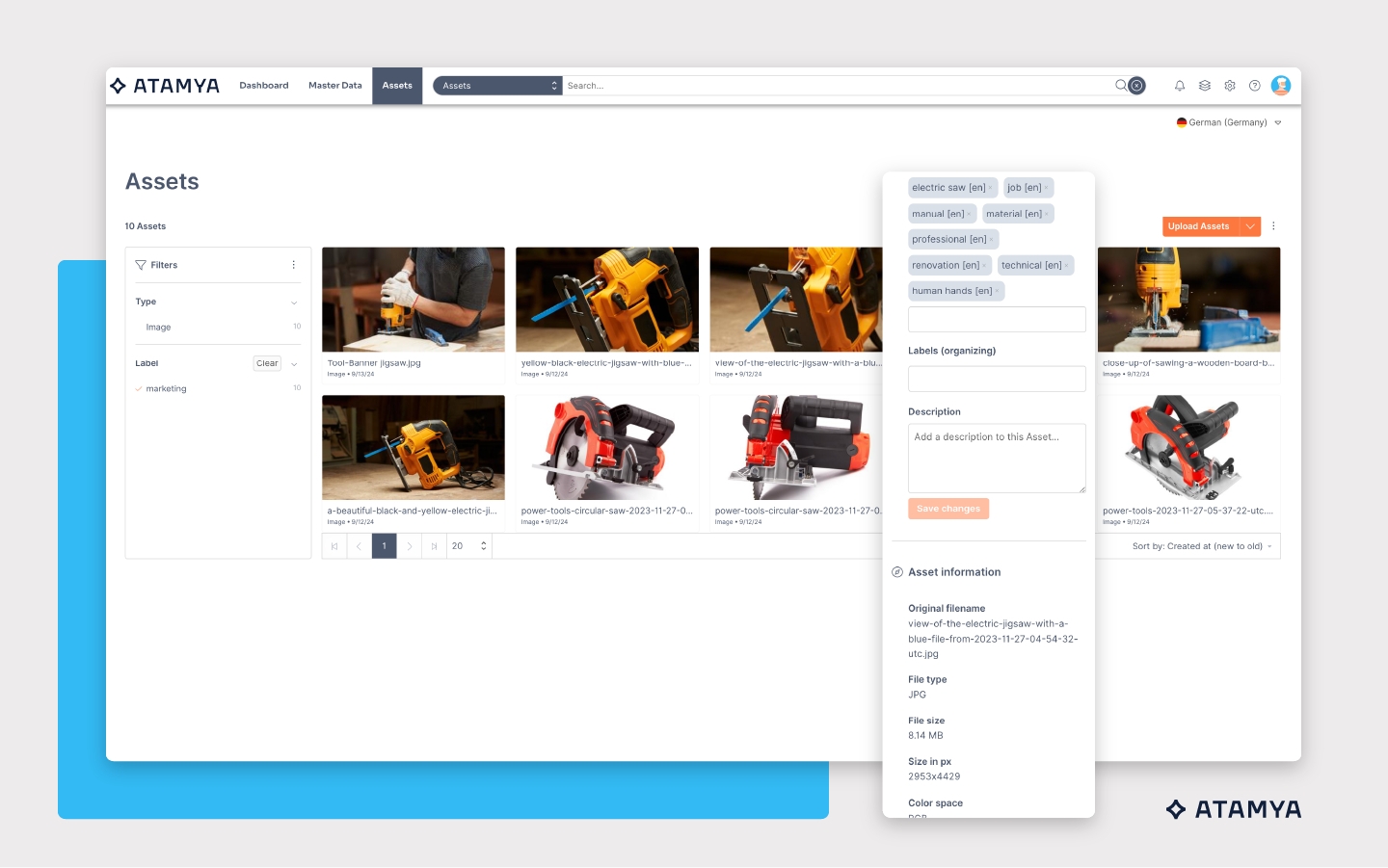
One particular advantage is the flexible data model. You can map product structures, attributes, domains, languages, units and relationships in a way that suits your product range, your markets and your processes. Even complex product relationships such as variants, accessories, spare parts or cross-selling structures can be modeled. The solution also supports integrated digital asset management so that images, videos, documents, certificates and other media can be linked directly to product data.
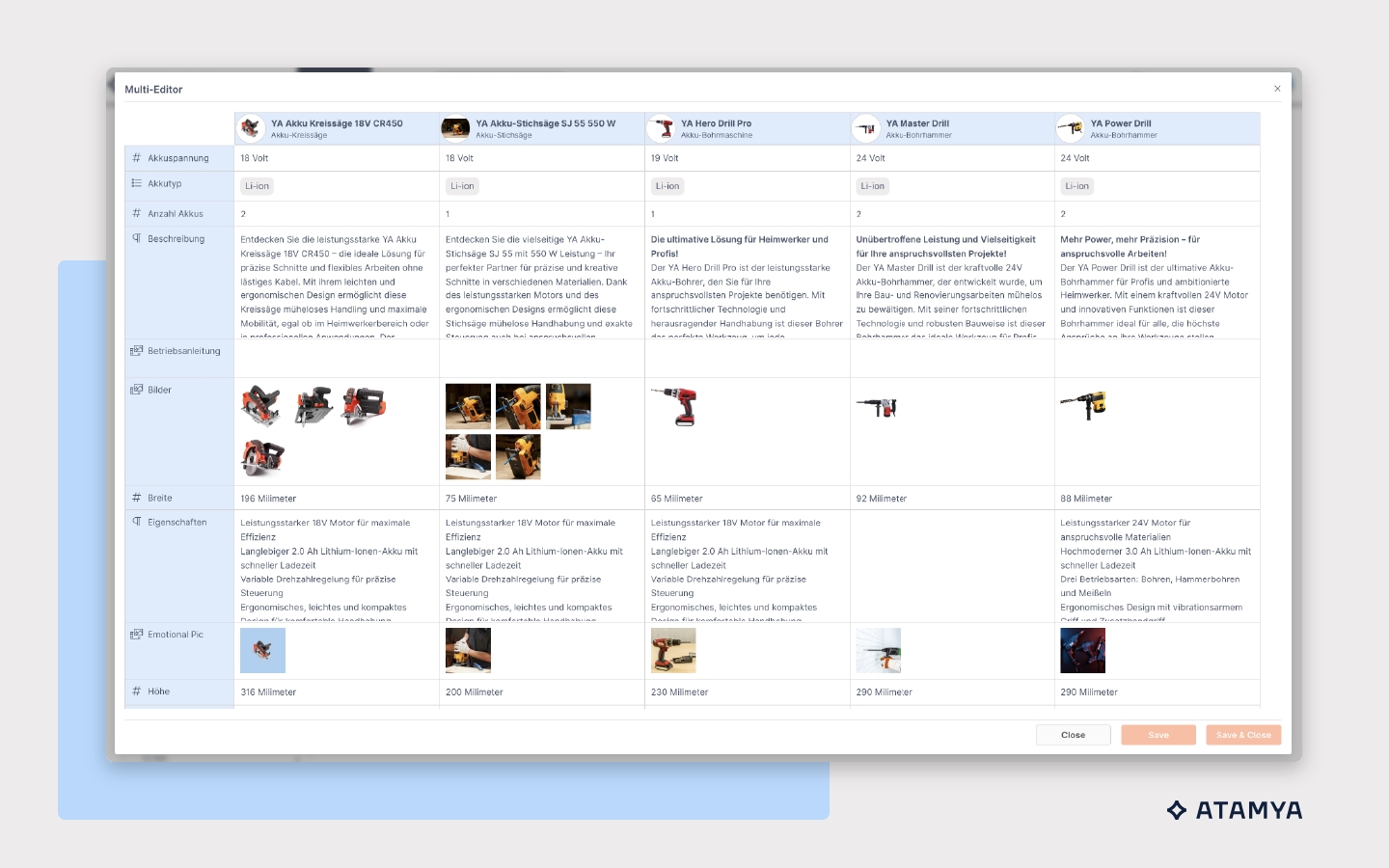
For operational work, ATAMYA Product Cloud offers functions for data maintenance, mass processing, search, filtering, quality checking, translation, AI-supported content creation, data distribution and workflow control. Product data can be automatically imported, validated, enriched and then transferred to stores, marketplaces, publishing tools or other target systems via APIs, exports or connectors.
The software is particularly suitable for companies that want to professionalize product data processes, shorten time-to-market and efficiently provide product information for different target groups, countries, channels or brands. Thanks to its modular structure, API-first approach and cloud-native architecture, the solution can be flexibly integrated into existing system landscapes and expanded as requirements grow.
ATAMYA is used by medium-sized and enterprise companies that work with growing and complex product data and want to expand their digital sales expertise. Typical users are organizations with many variants, multiple languages, international markets or a large number of digital sales channels that want to manage their product data in a central, structured and scalable way.
Typical users of ATAMYA are e-commerce teams, product management, marketing and data management. While e-commerce and marketing teams benefit from fast, consistent product information for all channels, data and product managers use the PIM for structured planning, maintenance and further development of product data across the entire product life cycle. IT departments appreciate the modern architecture, high scalability and easy integration into existing system landscapes.
ATAMYA is particularly suitable for companies that want to grow, internationalize or open up new digital sales channels. The PIM system creates the technological and organizational basis for managing product data efficiently, automating processes and remaining competitive in the long term.
ATAMYA Product Cloud is used to centrally manage and provide structured product information, media data, attributes, variants, translations and channel-related content.
The solution is suitable for companies with extensive or growing product data inventories, multiple sales channels, international markets or complex data quality and product communication requirements.
Yes, you can flexibly define object types, attributes, domains, languages, units and product relationships and adapt them to your business processes.
Yes, the software offers integrated DAM functions for images, videos, documents, PDFs and other media. These assets can be linked to product data and managed in a structured manner.
ATAMYA Product Cloud offers quality rules, data quality scoring, reports and filter functions with which you can specifically identify and improve incomplete or incorrect product data.
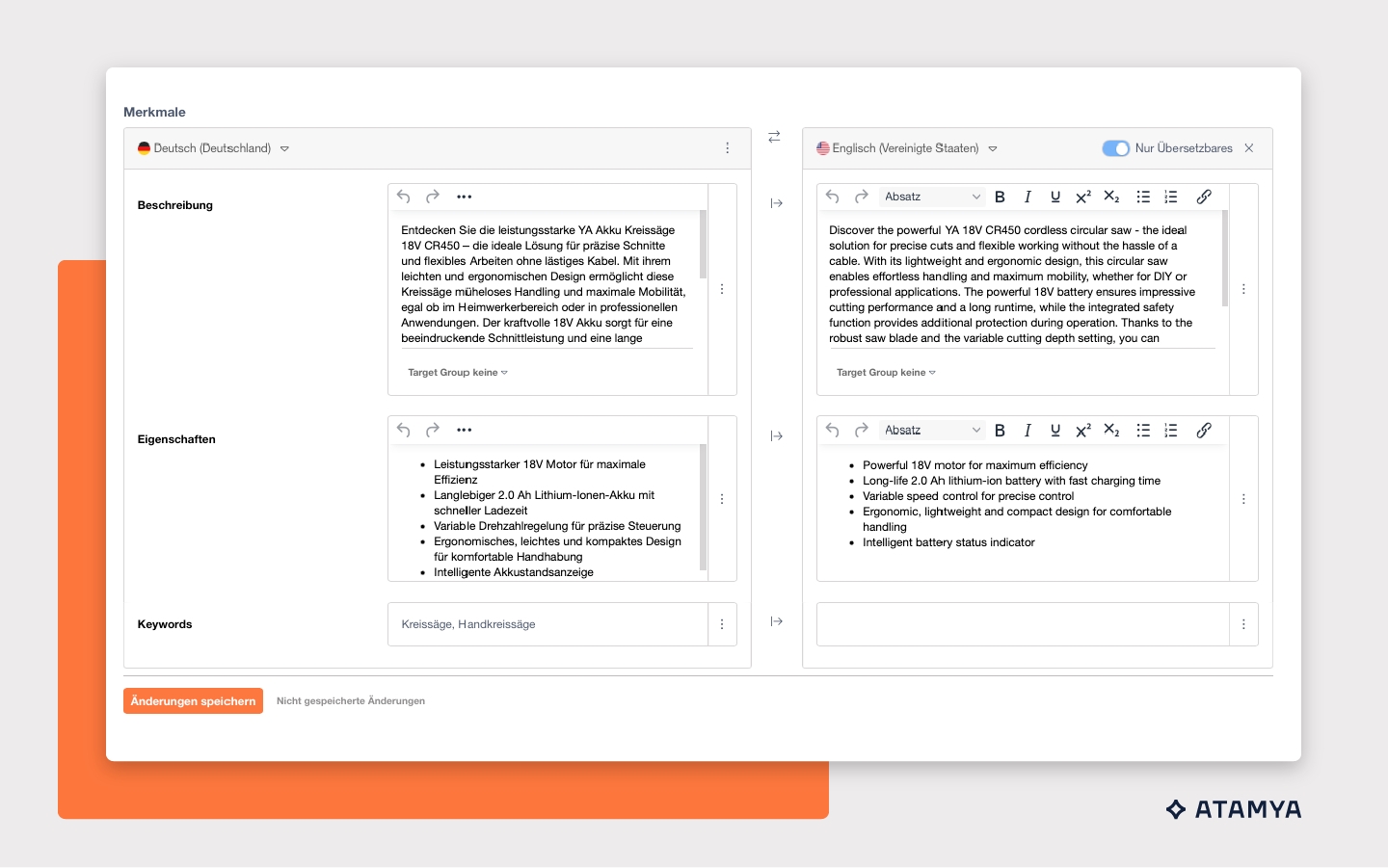
Yes, multilingual product data maintenance, translation editor, AI-supported translation and contextual content support you in providing international product information.
Yes, product data can be output to e-commerce systems, marketplaces, publishing solutions and other target systems via exports, APIs or connectors.
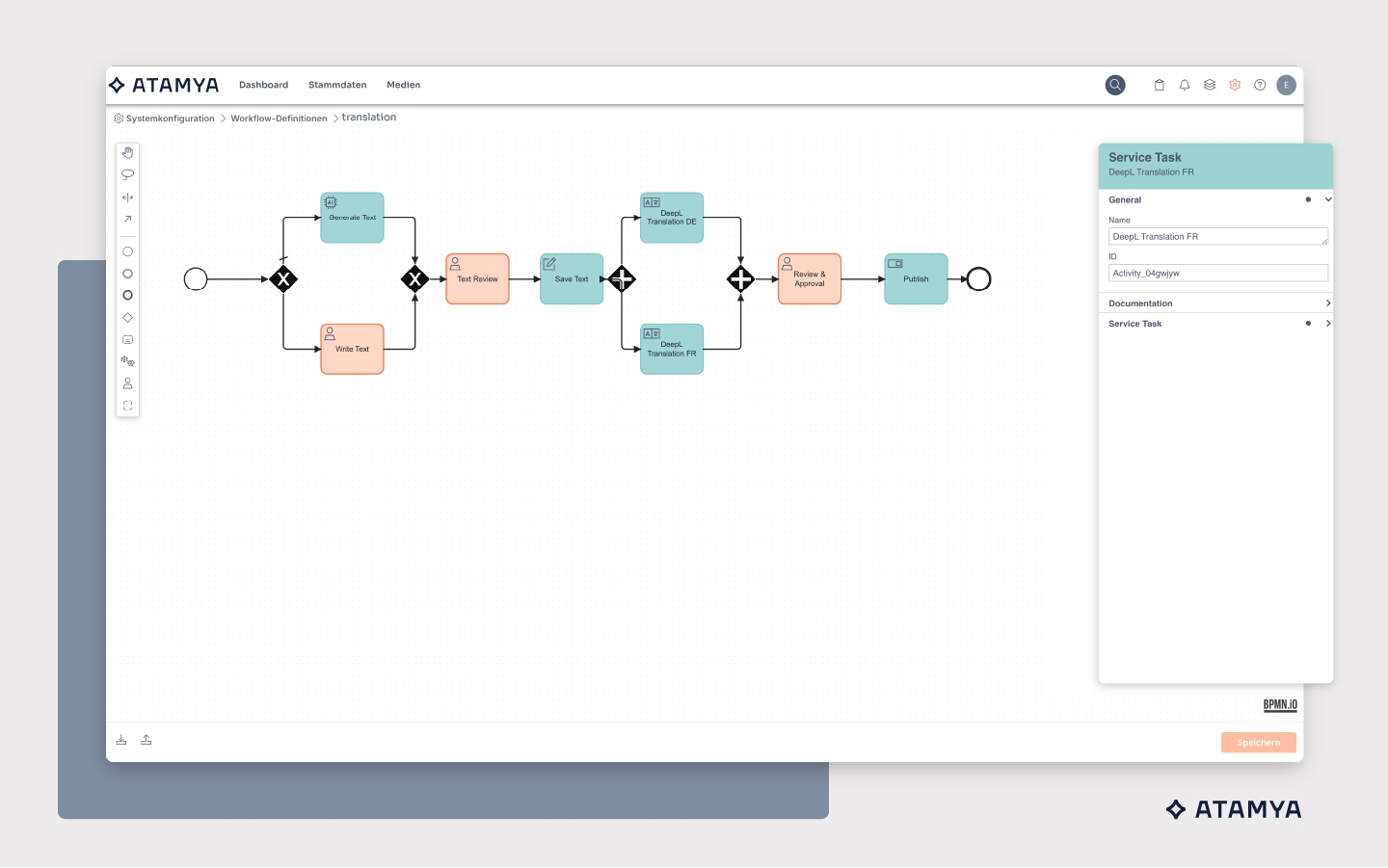
Yes, roles, rights, tasks, approval processes and workflows help you to manage responsibilities transparently and organize data maintenance processes efficiently.
AI functions can support data import, the structuring of unstructured content, text creation and translation processes, among other things.
Yes, thanks to REST APIs, connectors and an API-first approach, the solution can be connected to ERP, CRM, PLM, DAM, store, marketing and publishing systems.