What Is a CMMS and Why Does It Matter?
A Computerized Maintenance Management System (CMMS) is a software solution designed to help companies manage, organize, and optimize their maintenance operations. CMMS systems provide tools for planning, tracking, and documenting maintenance activities. At the core of a CMMS is a central database that stores all relevant information about assets, machinery, and equipment. For modern businesses, these systems play an important role in improving efficiency, reducing costs, and extending asset life cycles.
Why Maintenance Management Matters
Reliable business operations depend on well-maintained equipment and systems. That is why effective maintenance management is essential for companies across industries. Poorly managed maintenance can result in frequent breakdowns, rising repair costs, and increased safety risks. A structured maintenance strategy helps improve asset reliability, lower operating costs, and create a safer working environment for employees.
Improving Efficiency
Automated Work Order Management
A CMMS helps companies manage work orders more efficiently by automating their creation, assignment, and tracking. As a result, maintenance tasks can be completed faster and with greater accuracy. With the right system in place, employees can view their assigned tasks directly and update progress in real time. This typically leads to better coordination and smoother maintenance workflows.
Key benefits of automated work order management:

Optimized Resource Planning
Maintenance software can monitor the current condition of assets and available personnel resources in real time. By analyzing historical data and taking scheduled maintenance into account, the system can create optimized work plans and support the most effective allocation of resources.
Examples of optimized scheduling and resource allocation:

Reducing Costs
Minimizing Unplanned Downtime
By supporting preventive and predictive maintenance strategies, a CMMS can significantly reduce unplanned downtime. The software continuously evaluates asset condition data and detects potential issues before they lead to failures. This enables companies to take proactive maintenance measures and avoid costly disruptions.
Financial benefits of reduced downtime:

Extending Asset Lifespan
Regular maintenance and timely repairs are both essential for extending the service life of equipment and machinery. A CMMS helps ensure that all maintenance-related activities are carried out according to recommended schedules. This reduces wear and tear while optimizing overall asset performance.
Examples of cost savings through longer asset lifespans:

Enhancing Safety Standards
Improving Workplace Safety
A Computerized Maintenance Management System supports compliance with safety standards by ensuring that maintenance tasks are completed correctly and on time. Regular inspections and preventive maintenance help prevent hazardous conditions and contribute to a safer workplace.
Examples of improved workplace safety through regular inspections and maintenance:

Compliance and Documentation
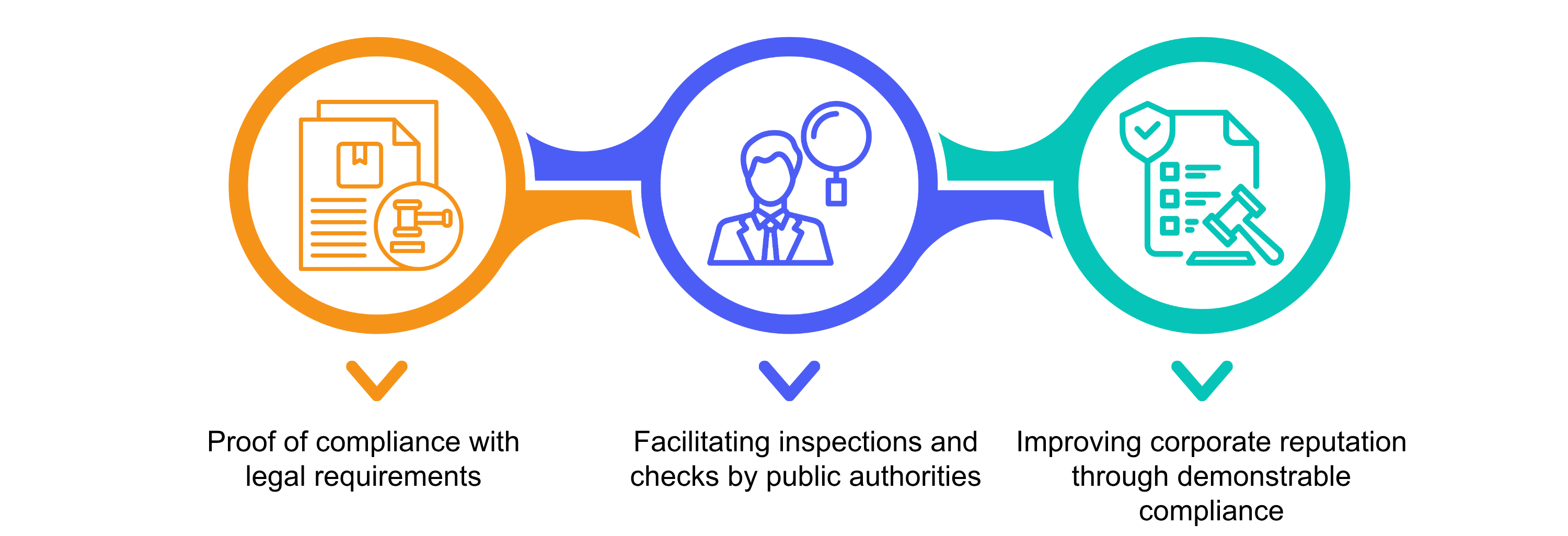
Using a CMMS allows companies to document required maintenance activities in full compliance with legal requirements and industry standards. This makes it much easier to provide clear evidence during audits and certification processes.
Why complete documentation is essential for audits and certifications:
Data Analysis and Better Decision-Making
Transparent Data and Reporting
A CMMS continuously collects and analyzes data related to maintenance activities and asset conditions. This information can be presented in clear reports and dashboards, giving companies greater visibility into their maintenance performance and helping them identify improvement opportunities.
Examples of reports and dashboards for monitoring maintenance activities:

Stronger Basis for Decision-Making
Improved data quality also enables deeper analysis, allowing companies to make more informed maintenance decisions. Managers can identify patterns, recognize trends, and use these insights to implement targeted strategic measures.
Examples of how companies benefit from data-driven maintenance decisions:

Boosting Employee Productivity
Training and Knowledge Management
A CMMS can support employee training and continuous development by providing access to knowledge bases and technical documentation. This helps teams build expertise over time and improves the overall quality of maintenance work.
The value of knowledge bases and documentation for employee productivity:

Reducing Administrative Work
A CMMS automates many administrative tasks, giving employees more time to focus on value-adding activities. Manual processes such as data entry can often be reduced through remote data capture from machines and equipment. Basic scheduling and reporting can also be handled by the system.

Scalability and Adaptability
Flexibility for Growing Business Needs
A CMMS can grow alongside the needs of an expanding company. It can be adapted to new processes, larger teams, and additional assets without compromising efficiency. This makes it a future-ready solution for businesses with evolving requirements.
Customization options and modular enhancements:

Integration with Other Business Systems
In most cases, a CMMS can be integrated seamlessly with other business systems such as ERP, CRM, and production software. This supports smooth data exchange, eliminates information silos, and improves overall operational efficiency.
Benefits of seamless data flows and system interoperability:
Conclusion
Implementing a CMMS offers a wide range of advantages for companies, including improved efficiency, lower costs, enhanced safety standards, better decision-making, and higher employee productivity. For businesses looking to optimize their maintenance processes and strengthen their competitiveness, a CMMS is an essential tool.
The future of CMMS technology will be shaped by innovations such as artificial intelligence, machine learning, and the Internet of Things (IoT). Companies that keep pace with these developments and invest in future-proof solutions will be well positioned to benefit from the full potential of modern maintenance software.